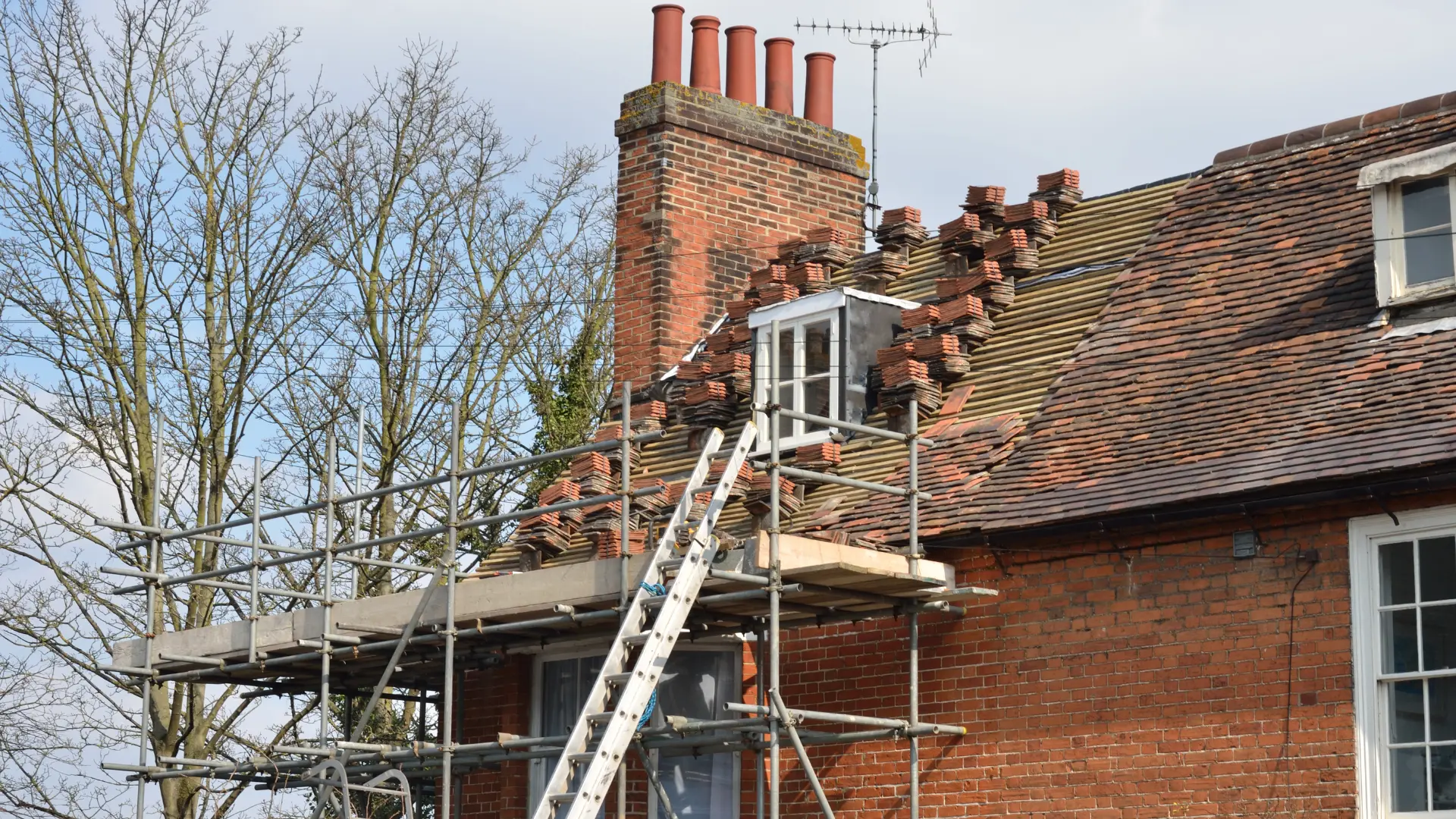
Clay tiles stacked along a stripped roof slope beside a brick chimney during a roof repair

Roof Repairs & Leak Detection
In Maidenhead & Berkshire
We Find The Cause, Not The Stain

A leak is stopped once when the water path is traced properly, and paid for twice when it is patched where the damp shows. You get a photographic report of what is actually wrong, a fixed price to put it right, and a repair that holds through the next winter.

Traditional materials specialists · Photographic report on every inspection · Fixed-price quotes, never a day rate

15+ years

Experience, with 30+ combined years across the team

£2 million

Public liability insurance cover

10-year guarantee

Workmanship guarantee on re-roofs, new roofs and major works

Fixed price

Quoted work only, never a day rate

Photo report

Photographic evidence with every inspection

Service overview

What roof repair and leak detection actually involves

Roof repair covers everything short of a full re-roof: slipped and cracked slates, broken tiles, failed valleys, split lead, blown ridge and hip pointing, defective flashings around chimneys and abutments, damaged verges, and flat-roof splits or blistering. Leak detection is the diagnostic half of the job, establishing where the water is entering before anyone starts replacing materials.

Water rarely appears inside directly beneath the fault. It runs along the underside of a batten, tracks down a rafter, crosses a ceiling joist and drops through the first plasterboard joint it finds. A stain in a bedroom corner can begin two metres up the slope at a lead soaker or at a chimney tray that has lost its cover flashing. That is why we get on the roof, inspect the details individually, and photograph what we find rather than guessing from inside.

Once we know the cause, the repair is specified in writing at one fixed price: which materials, which details, and what we are not touching. If the honest answer is that the covering has reached the end of its life and repairs will only buy a season, we tell you that plainly instead of selling you a patch every spring.

Who this is for

  • Homeowners with a damp patch, drip or stain that appears after heavy rain or driving wind
  • Owners of period, listed and conservation-area properties who need repairs made in matching materials
  • Landlords and letting agents needing a defect diagnosed and evidenced before committing spend
  • Buyers and sellers whose survey has flagged the roof and who need a real assessment of it
  • Anyone who has already had a repair that did not hold

When it is needed

  • Damp patches, stains or drips on ceilings, chimney breasts or upstairs walls
  • After storms and high winds: slipped slates, lifted lead, displaced ridge tiles
  • Visible daylight, sagging felt or wet timbers seen from inside the loft
  • Mortar, granules or tile fragments collecting in gutters and on the ground
  • Blown pointing, rust stains, moss build-up or a valley holding standing water

The cost of leaving it

What an unresolved leak costs you

A roof leak is not a static problem. Water keeps arriving, and the cost rises in stages: first the covering, then the structure, then everything inside the building. The repair that would have taken an afternoon becomes a re-roof with joinery and redecoration attached to it.

Wet timber turns into replaced timber

Battens, rafter feet, wall plates and valley boards hold moisture. Once rot sets in, the repair moves from replacing a covering to carpentry, and the cost multiplies. This is the single most common way a small leak becomes a large bill.

Insulation and plaster fail quietly

Saturated loft insulation stops insulating and stays wet for weeks. Plaster blows, ceilings stain permanently and skirtings and floors swell. You end up paying a decorator to repair damage the roof caused months earlier.

Damp and mould spread through the room below

Persistent moisture behind a chimney breast or in a bedroom corner produces black mould and musty air that no amount of ventilation clears while the water is still coming in.

Adjacent details start to fail too

A leaking valley or chimney tray keeps the surrounding slate, mortar and lead permanently wet. Freeze-thaw cycles then break down pointing and delaminate slate that had years left in it, widening the area of repair every winter.

Heritage material becomes irreplaceable

On period and listed properties, hand-made tiles and original slate cannot be bought off a shelf. Every season of neglect breaks more of the material that keeps a repair sympathetic and consistent.

Common mistakes we are called in to undo

  • Repairing where the stain is rather than where the water enters, the leak returns at the next driving rain
  • Spreading bituminous paint or sealant over flashings and valleys, which traps moisture and destroys the detail underneath
  • Mortar filleting instead of proper lead flashing at chimneys and abutments, which cracks within a couple of years
  • Cementing over a whole ridge or verge so the roof can no longer breathe or move
  • Accepting a day-rate repair with no diagnosis, no photographs and no written scope
  • Leaving a small defect until the loft insulation is already wet

Our process

How we run the job, step by step

  1. 01

    Step 1, Inspection

    We attend, get proper access and inspect the roof detail by detail: slate and tile condition, valleys, flashings, chimney trays, ridges, verges, rainwater goods and the loft interior where we can reach it. Free in most cases; jobs needing special access to inspect safely may differ and we tell you before we attend.

  2. 02

    Step 2, Diagnosis and photographic report

    We trace the water path from the point of entry to where it shows inside and record everything photographically. You receive a detailed report so you can see the defect for yourself rather than take our word for it, and so you can compare our findings against anyone else's.

  3. 03

    Step 3, Fixed-price written quote

    One figure for the repair, with the materials and details specified and anything excluded stated. No day rates and no open-ended totals. If a repair is not the right answer, we will say so and quote the alternative honestly.

  4. 04

    Step 4, The repair

    Typically two to three of our tradespeople on site. Access set up properly, the property protected, the roof kept weathertight as we work, and materials matched to what is already there: natural slate, clay or hand-made tile, and hand-dressed lead where lead belongs.

  5. 05

    Step 5, Verification and sign-off

    We check the repaired detail, clear the site and walk the finished work with you, with photographs of the completed repair. Major works carry our 10-year workmanship guarantee; for smaller repairs we confirm in writing what is covered for your specific job.

What you get

The practical difference on your roof

You stop paying for the same leak twice

Diagnosis before repair means the cause is dealt with, not the symptom. That is the difference between one invoice and an annual patch.

Evidence you can hold

Photographs of the defect and of the finished repair, useful for your own records, for a landlord, for a purchaser or for an insurer.

The price does not move

Fixed-price quoting means the cost is agreed before work starts. We do not work on day rates, so a slow day is our problem, not your bill.

The structure stays dry

Catching a defect while it is still a covering problem protects battens, rafters, insulation and ceilings, the expensive part of any roof.

Repairs that suit the building

Matched materials and traditional detailing on period, listed and conservation-area roofs, so a repair does not announce itself from the street.

Safety kept off your shoulders

Proper access, trained tradespeople and £2 million public liability cover, nobody is on a ladder in your gutter chancing it.

The detail

Leak detection and repair in detail

Most roofs leak at junctions rather than in open field. Knowing the failure patterns of each detail is what turns a hunt into a diagnosis.

Where roofs actually leak

Chimneys are the most common source on Berkshire housing stock: cracked flaunching, perished cement filleting, missing cover flashings, failed back gutters and chimney trays that were never formed correctly. Water entering here often shows up in the room below and to one side, which is why the chimney breast gets blamed for rising damp.

Valleys are second. Lead valleys fail at the laps or where they have been dressed too thin and fatigued; the modern GRP or cement-fibre valley troughs used in later repairs crack along the centre. Both hold debris, which dams water and pushes it sideways under the slate.

Abutments where a roof meets a wall, parapet gutters, bay tops, dormer cheeks and around roof windows account for most of the rest. In open field, leaks are usually slipped slates from nail fatigue, delaminated slate, frost-cracked concrete or clay tiles, or a torn underlay letting wind-driven rain through.

How we trace water

We start with the interior evidence, where the stain is, how fresh it is, whether it appears in all rain or only in driving rain from one direction. Wind-direction dependence points at flashings and verges; volume in every downpour points at a valley or a broken covering.

In the loft we look for the highest wet point on rafters, battens and underlay, since water always runs downhill from the entry. Externally we then examine that zone detail by detail. Where access permits, controlled water testing on suspect details confirms the diagnosis before anything is dismantled.

Every finding is photographed. Where a defect is hidden under a covering, we lift and photograph rather than assume.

Materials and methods used in repair

Slate repairs are made with matched natural slate, re-hung on copper or stainless tingles where a single unit has slipped, or nailed conventionally where a wider area is being reset. Clay, hand-made and concrete tiles are matched for size, camber and colour so a repair blends into the coursing.

Leadwork is code-appropriate, cut to length so it can expand and contract, welted or clipped at free edges, and dressed by hand on site. Sand-cast lead is used where the building and its setting call for it, which on listed and conservation-area work is often a requirement rather than a preference.

Ridges and hips are re-bedded and repointed in a correctly gauged mortar rather than smeared. Flat-roof repairs address the detailing that caused the failure, falls, upstands and outlets, not just the split in the surface.

Repair, or replace?

Localised damage on a covering with life left in it is a repair. Widespread nail fatigue, delaminating slate across whole elevations, or a covering that has already been patched repeatedly is a re-roof, and repairs on it are money spent to buy time rather than to fix anything.

We will tell you which situation you are in, and if repair is genuinely the better value we will say so even where a re-roof would be the larger job for us. Where you want both figures, we will quote the repair and the re-roof so the decision is yours on real numbers.

Emergency and storm-damage repairs

Emergency repairs are available for storm damage and active leaks. Call us and we will tell you honestly when we can be with you rather than promise a window we cannot keep.

For insurance claims, the photographic report gives you dated evidence of the damage and of the work carried out, which is usually what an insurer asks for first.

Residential and commercial work

On homes, the priorities are matched materials, a protected property and a tidy site. On commercial and mixed-use buildings: shops with flats above, offices, converted period buildings, the priorities add access planning around occupants and trading hours, and larger areas of flat roof and parapet gutter.

The diagnostic method does not change. Trace the water, evidence it, quote it at a fixed price, repair the cause.

Questions

Roof Repairs & Leak Detection, your questions answered

Something not covered here? Call 07711 933023 and ask. We would rather answer it honestly on the phone than have you guess.

How much does a roof repair cost in Maidenhead?+

It depends entirely on the defect, which is why we inspect before quoting rather than giving a number over the phone. What we can promise is how the price works: one fixed figure for the specified repair, agreed in writing before we start, with no day rates and no additions unless you ask for extra work in writing.

Is the inspection and quote free?+

Quotes and inspections are free in most cases. Jobs needing special access to inspect safely may differ, and we tell you that before we attend rather than after.

How long does a repair take?+

Most single-defect repairs, a slipped slate, a cracked flaunching, a length of flashing, are completed in a day. Valleys, chimney rebuilds and multiple defects run longer, and we give you the expected duration with the quote so you can plan access.

How quickly can you come out for an active leak?+

Emergency repairs are available for storm damage and leaks. Call us and we will give you an honest answer on when we can attend for your job rather than a blanket response-time claim.

Do you guarantee repairs?+

Our 10-year workmanship guarantee applies to re-roofs, new roofs and major works. Smaller repairs are not covered by that guarantee unless we confirm otherwise in writing for your specific job, and we will always tell you which category your work falls into.

How long should a roof repair last?+

A correctly diagnosed and properly executed repair should last for the remaining life of the surrounding covering. New leadwork at a chimney or valley has decades in it. A repair to a covering already at the end of its life is a holding measure, and we will say so rather than imply otherwise.

Can you find a leak nobody else has been able to find?+

Frequently, yes, because the usual reason a leak is not found is that nobody traced the water path, they simply repaired near the stain. We inspect the details individually, work from the highest wet point rather than the visible damage, and photograph the evidence.

Will you damage my slates or tiles getting to the fault?+

We use proper roof access and work off the correct equipment rather than walking a covering. Where a slate or tile has to be lifted to reach a detail, it is refitted or replaced with a matched unit as part of the work.

Do you work on listed and conservation-area properties?+

Yes, period, listed and conservation-area roofs are our specialism, using natural slate, clay and hand-made tiles and sand-cast lead so repairs stay sympathetic to the building.

Do you cover my area?+

We work from Maidenhead across Berkshire, Buckinghamshire, Surrey, Hampshire and Oxfordshire, including Reading, Windsor, Slough, High Wycombe and Henley-on-Thames. Just outside that? Call and we will tell you honestly whether we can help.

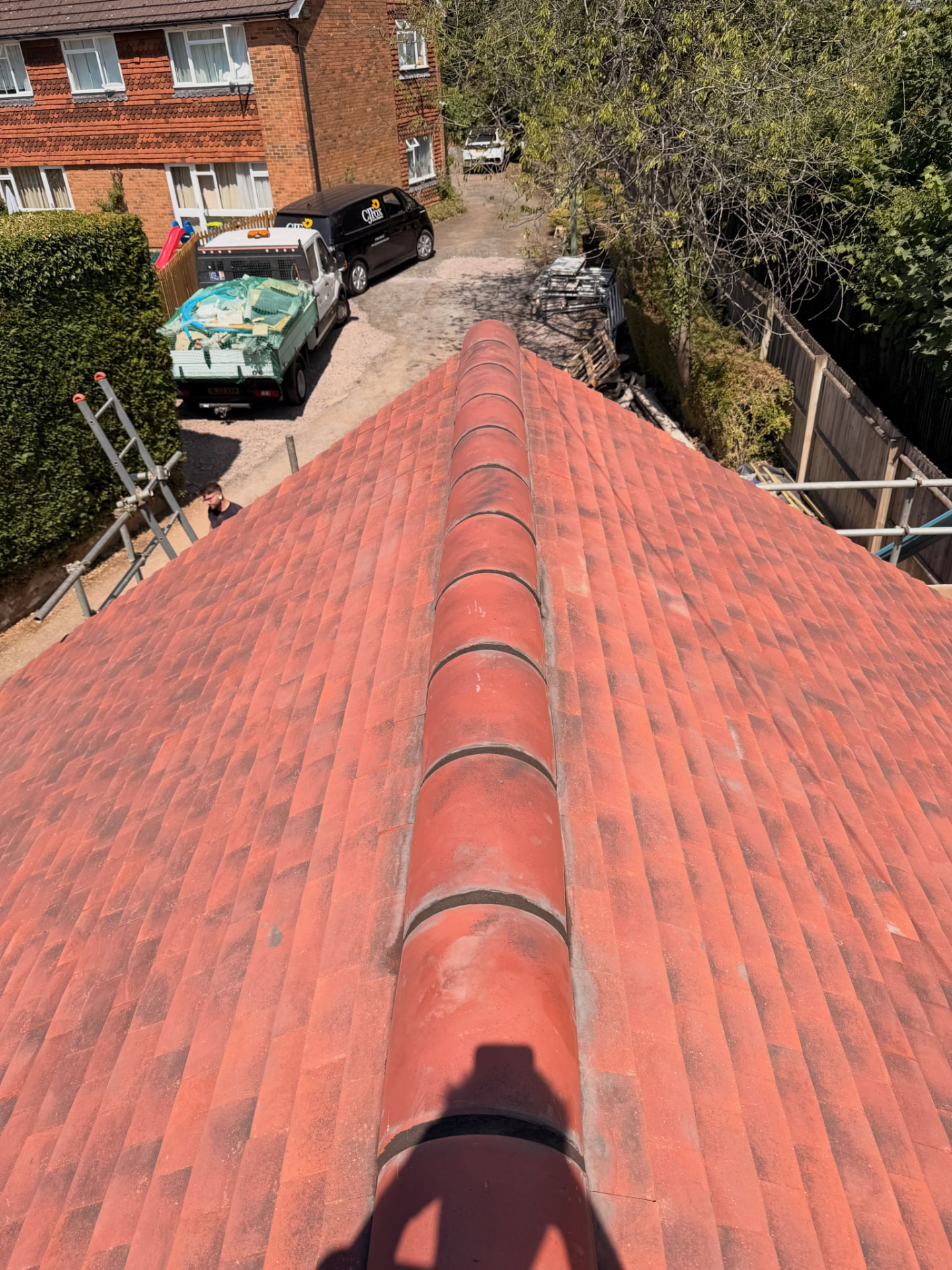
Ridge line of a completed clay tiled roof in Berkshire

Next step

Find out exactly why your roof is leaking

Book an inspection and you will get a photographic report of the real cause and one fixed price to fix it. Free in most cases, and no obligation to proceed.

  • Fixed-price quotes only, no day rates
  • Photographic report with every inspection
  • £2 million public liability cover
  • 10-year workmanship guarantee on re-roofs, new roofs and major works

151 Larchfield Road, Maidenhead, Berkshire, SL6 2SJ · Mon–Sat, 7am–10pm

Call NowFree Quote