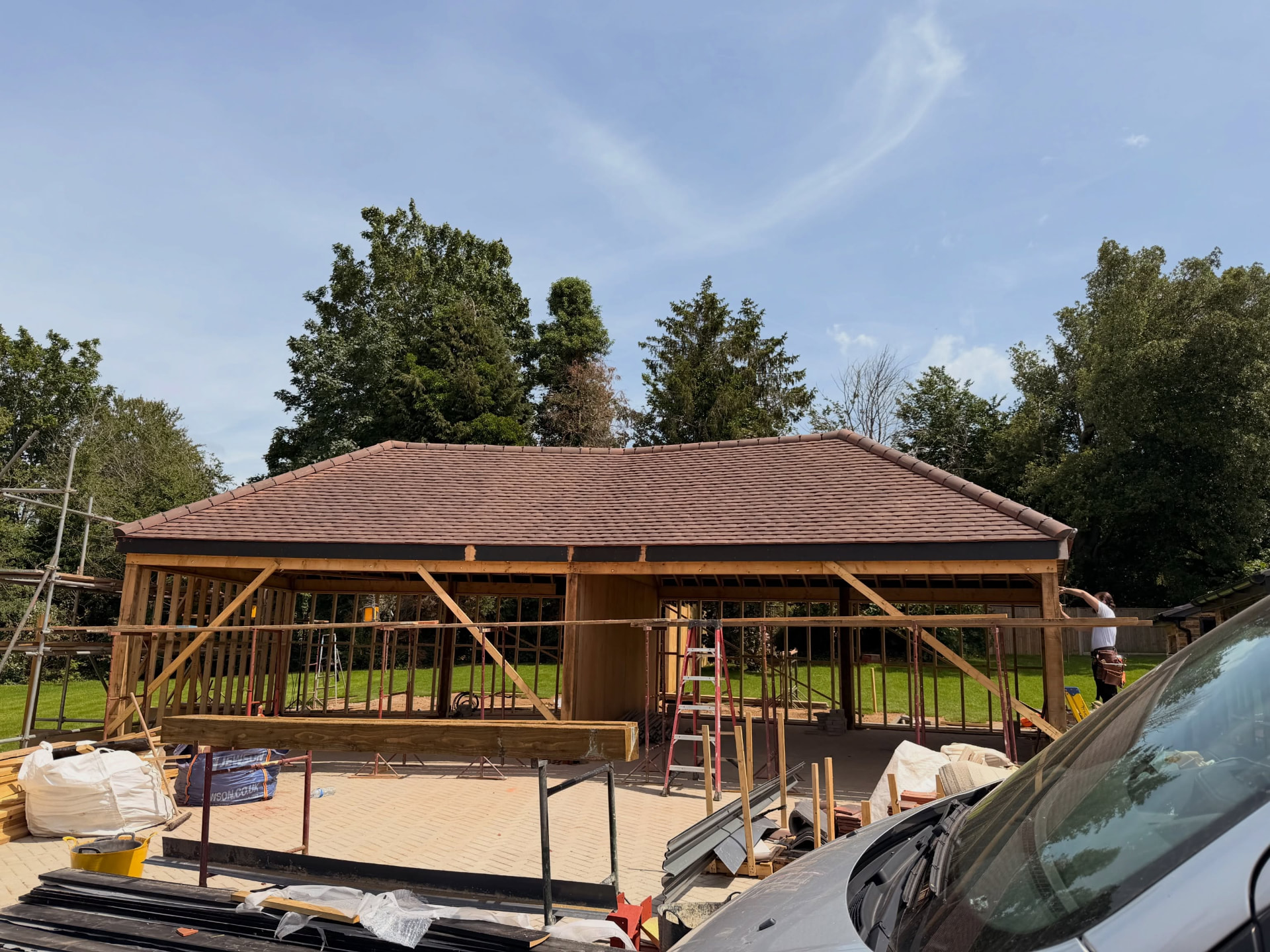
New tiled roof covering being completed on a building project, viewed from above

New Roofs & Complete Re-Roofing
In Maidenhead & Berkshire
Built Once, Built Properly

A re-roof is the one job on a house you do not want redone in ten years. You get a full photographic inspection before a slate is stripped, one fixed price for the whole project, and a 10-year workmanship guarantee once it is signed off.

Traditional materials specialists · £2 million public liability insurance · 10-year workmanship guarantee on re-roofs and new roofs

15+ years

Experience, with 30+ combined years across the team

£2 million

Public liability insurance cover

10-year guarantee

Workmanship guarantee on re-roofs, new roofs and major works

Fixed price

Quoted work only, never a day rate

Photo report

Photographic evidence with every inspection

Recent work

New Roofs & Complete Re-Roofing we have completed

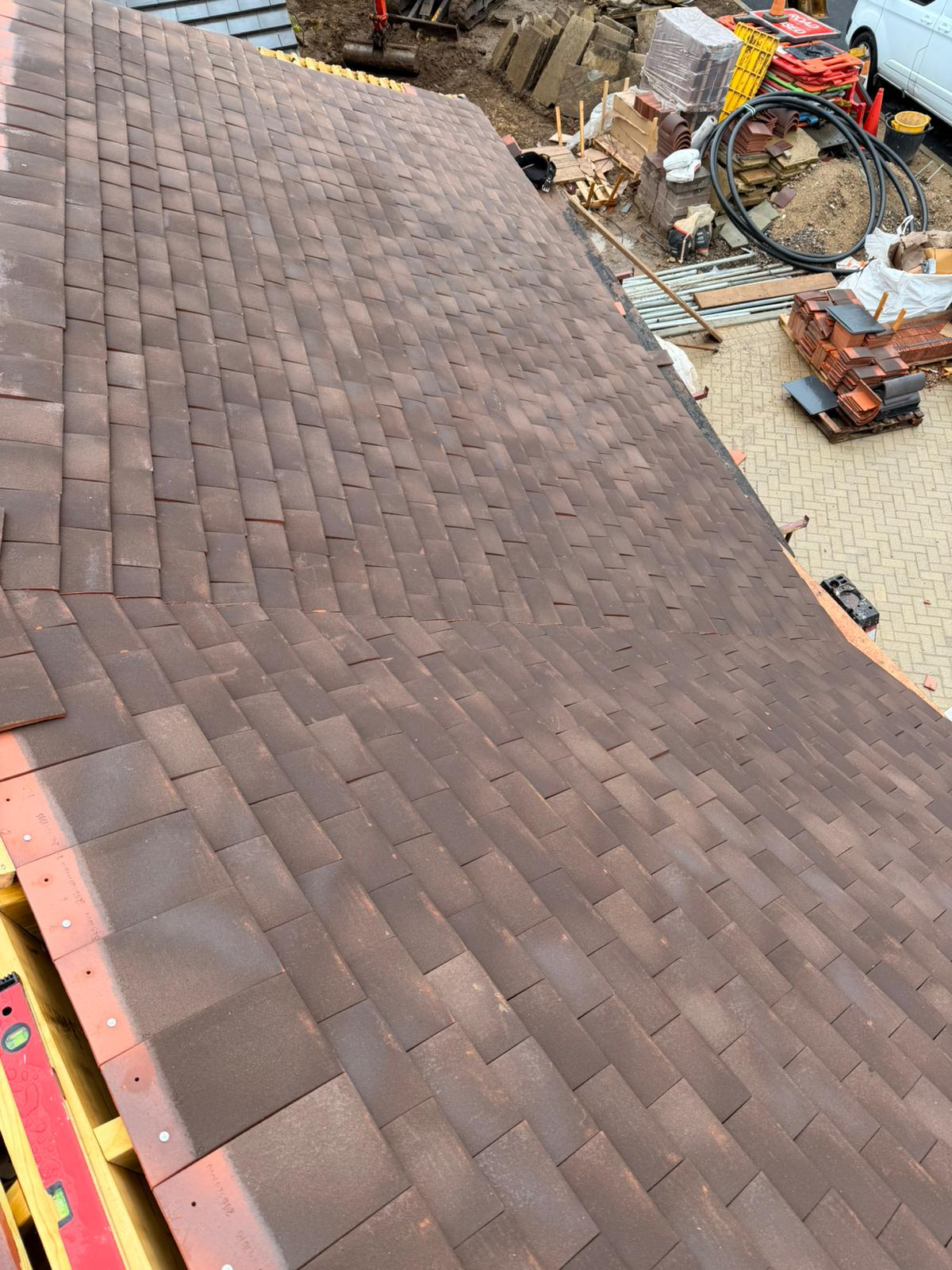
New tiled roof covering being completed on a building project, viewed from above
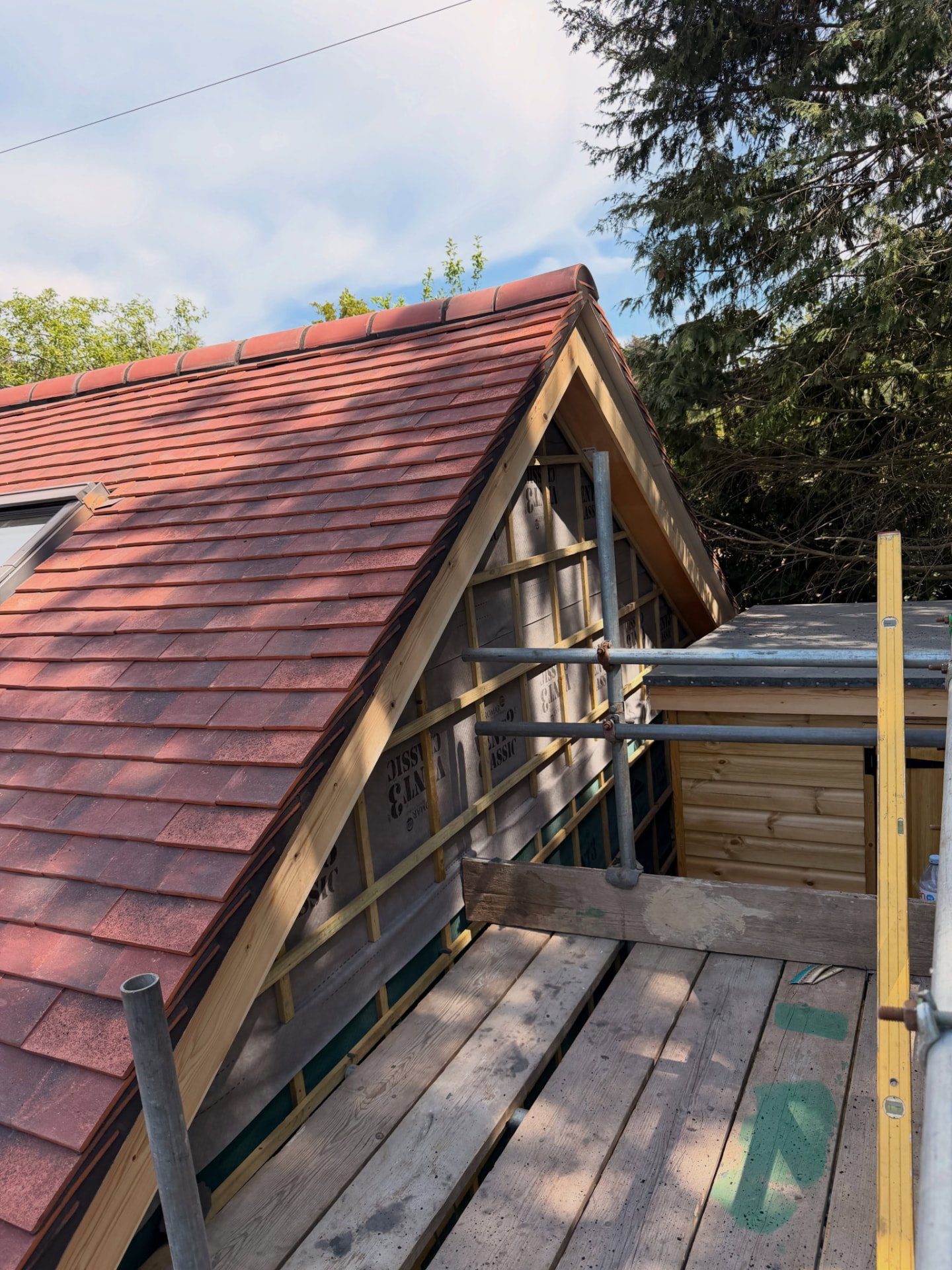
New clay tiled roof and gable on a timber-framed structure during a new roof build
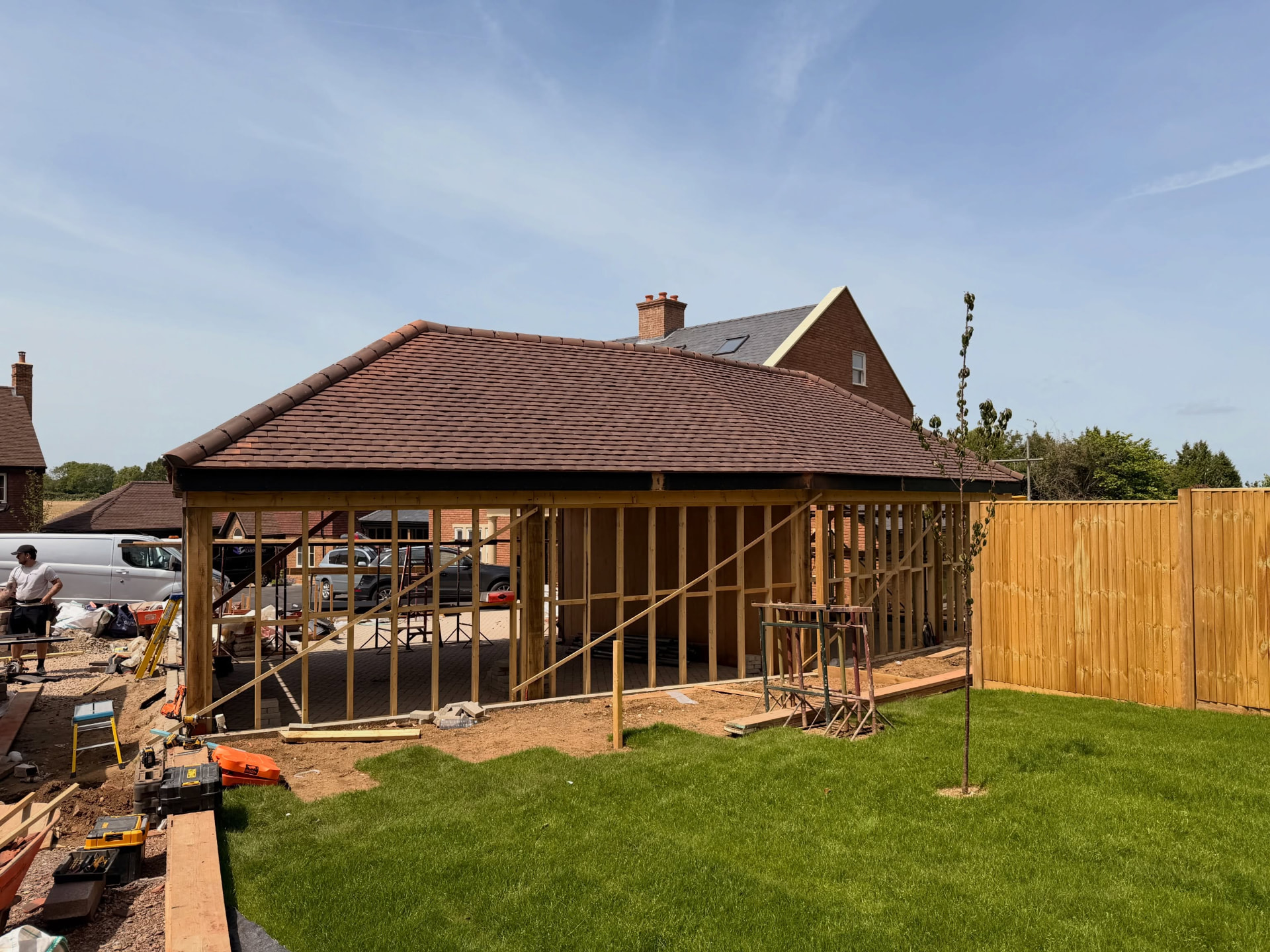
Completed new tiled roof over timber framing on a garden building
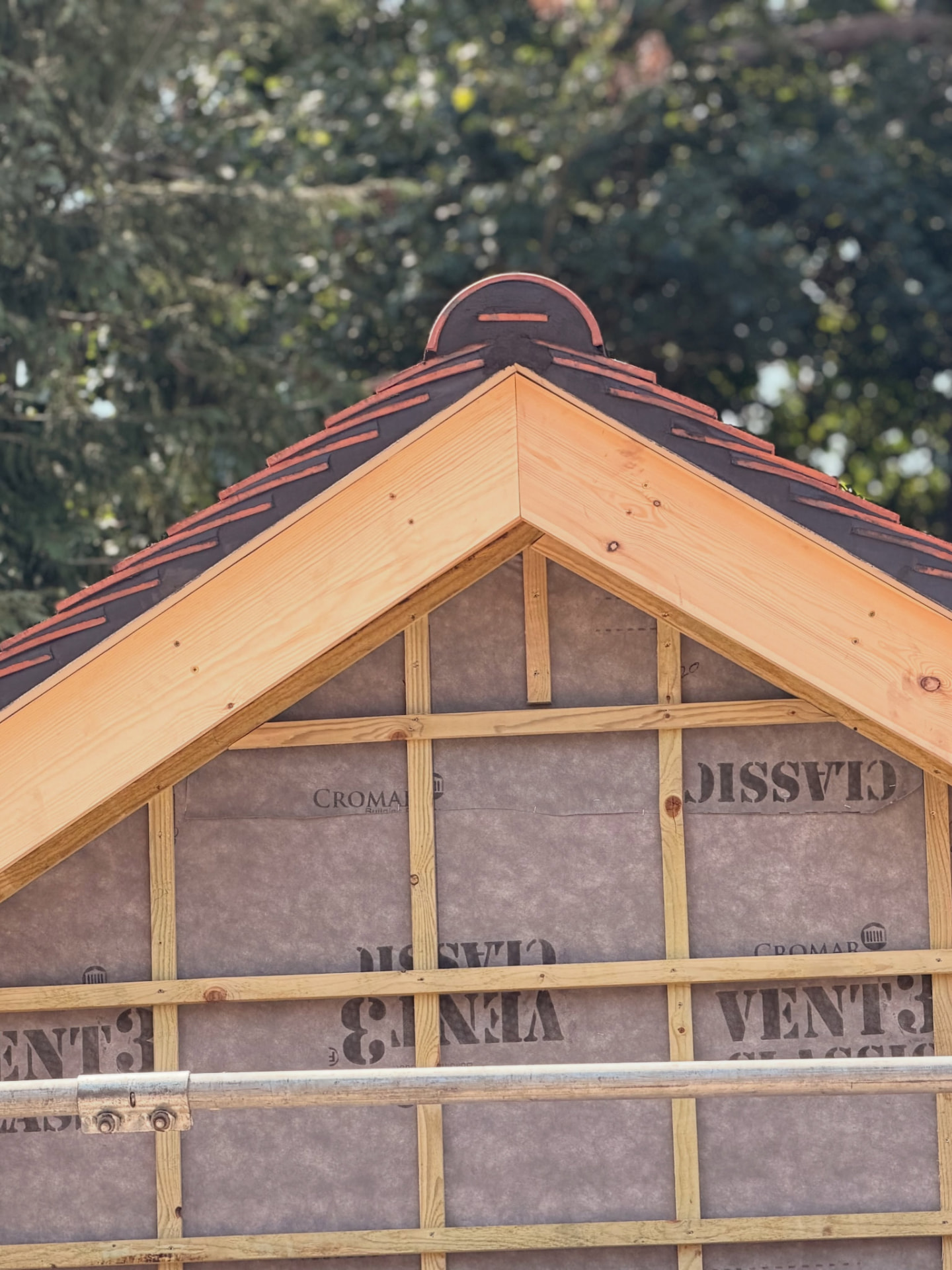
Newly tiled gable with terracotta ridge tiles and timber verge on a new roof
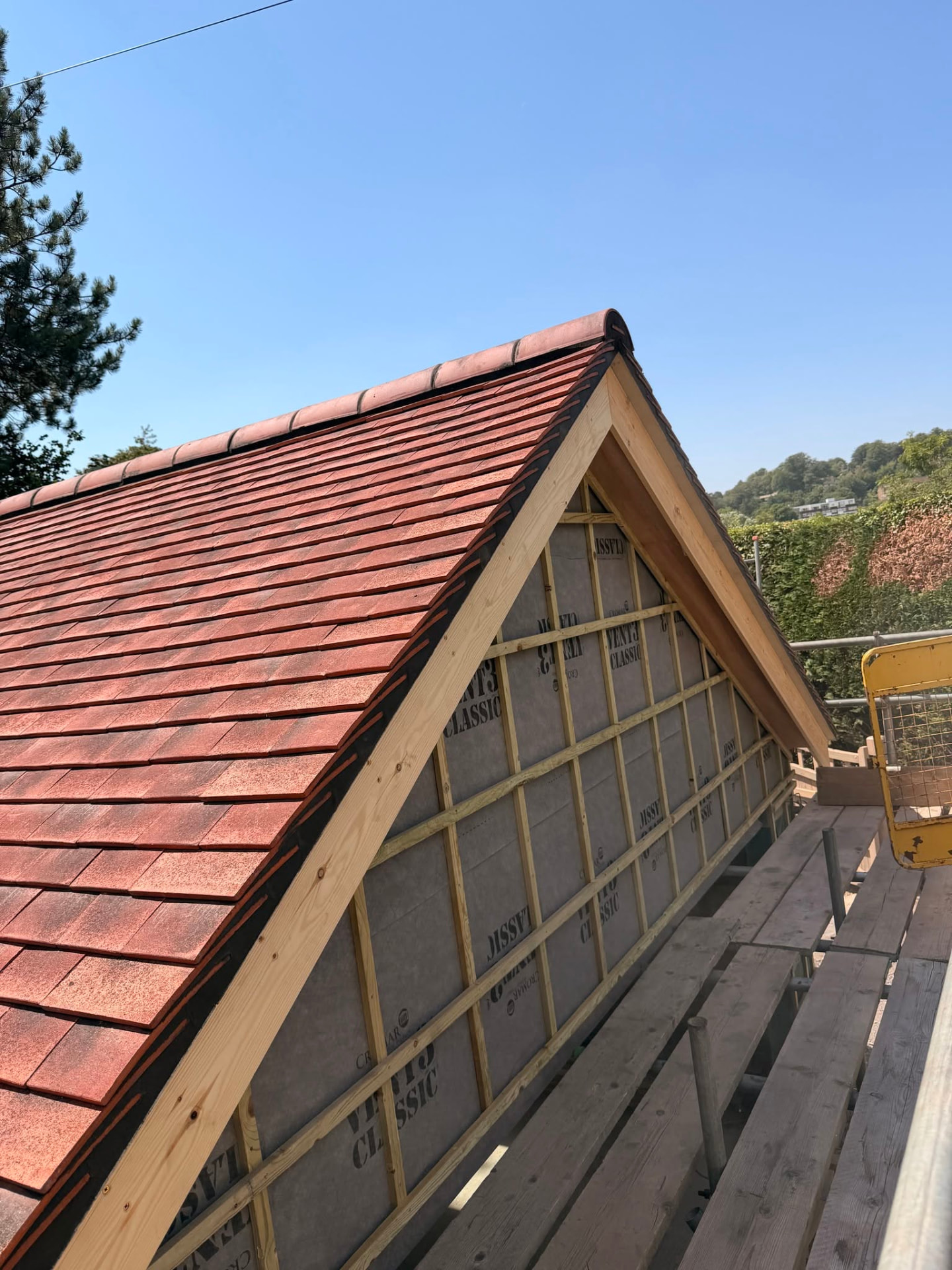
New clay tiled pitched roof and gable end nearing completion against a blue sky
New tiled gable roof under scaffolding with exposed timber framing during a re-roof

Service overview

What a new roof or complete re-roof actually involves

A complete re-roof means stripping the existing covering back to the rafters, replacing or repairing the roof timbers where needed, installing new breathable membrane and battens, and re-covering in slate, clay tile, concrete tile or a mix depending on the building. A new roof follows the same sequence on an extension, an outbuilding or a full rebuild, where there is no existing covering to remove but the same standard applies to what goes on. Either way, this is structural work, not a repair, and it is priced and planned as such.

The decision to re-roof rather than repair usually comes from one of two places: the covering itself has reached the end of its useful life, widespread nail fatigue, delaminating slate, tiles failing across whole elevations, or the roof has already been patched repeatedly and the patches are now the problem. We will tell you plainly which situation you are in during the inspection, and if a repair genuinely represents better value than a re-roof, we say so, even though it is the smaller job for us.

On period, listed and conservation-area properties, re-roofing is where sympathetic material choice matters most. Natural slate, hand-made clay tiles and sand-cast lead are specified where the building calls for them, and on listed buildings this is frequently a planning requirement rather than a preference. On modern housing stock, the priority shifts towards getting the underlay, battening, ventilation and detailing right so the new roof performs for its full service life rather than just looking finished on completion day.

Who this is for

  • Homeowners whose roof covering has reached the end of its life across whole slopes, not just one detail
  • Owners of period, listed and conservation-area properties needing a re-roof in matched heritage materials
  • Anyone extending or converting a loft who needs the new roof area to match or improve on the existing one
  • Buyers who have been advised by survey that the roof needs full replacement rather than patch repair
  • Landlords and developers planning a re-roof as part of a wider refurbishment programme

When it is needed

  • Repeated repairs to the same slopes with no lasting improvement
  • Widespread slipped, cracked or delaminating slate and tile across the roof rather than isolated spots
  • Sagging rooflines, visible daylight through the deck, or rot found in rafters and battens
  • A survey or valuation report flagging the roof covering as at or near the end of its life
  • Planning a loft conversion, extension or full renovation where the roof structure and covering need upgrading together

The cost of leaving it

What delaying a re-roof costs you

A roof covering does not fail all at once. It fails slope by slope, detail by detail, and every winter it is left in that state adds cost that a re-roof does not carry, because a re-roof deals with the whole structure in one project rather than chasing failures one at a time.

Repair spend stops delivering value

Once a covering is genuinely at the end of its life, every repair is a holding measure. Money spent chasing individual slipped slates and failed flashings on a roof that needs full replacement is money that does not extend the roof's life, only postpone the inevitable project at a higher eventual cost.

Rafters and battens deteriorate out of sight

A tired covering lets moisture into the roof void gradually, long before it shows as a ceiling stain. By the time a re-roof is finally booked, sections of timber that could have been reused now need replacing, adding to the carpentry content of the job.

Reclaimed and matching material becomes harder to find

On period properties, the longer a failing slate or tile roof is left, the more of the original material is lost to breakage and weathering. Sourcing enough matching or reclaimed units to keep a re-roof sympathetic to the building gets harder every year it is delayed.

Ventilation and insulation problems compound

Old roofs are frequently under-ventilated by current standards, which leads to condensation, timber decay and reduced performance of loft insulation. Leaving a re-roof until the covering fails completely means these underlying issues go unaddressed for longer.

A distress purchase replaces a planned project

A roof that fails suddenly: a collapsed section, a major storm loss: forces an emergency re-roof on someone else's timetable, with less time to plan access, source specific materials or sequence the work around your household or business.

Common mistakes we are called in to undo

  • Re-covering over rotten or undersized battens and rafters instead of replacing them
  • Mixing incompatible underlay and ventilation strategies, which traps moisture inside the roof void
  • Using a covering that does not match the building's character on a period or listed property, which planning may reject outright
  • Skipping a written specification and working from a verbal agreement on what materials and details are included
  • Accepting a day-rate arrangement on a job of this scale, where cost can run away with no fixed ceiling
  • Treating a re-roof as purely cosmetic and ignoring the leadwork, ridge, valley and ventilation details that determine how long it actually lasts

Our process

How we run the job, step by step

  1. 01

    Step 1, Inspection

    We inspect the existing roof structure and covering slope by slope, assess the rafters, battens and ventilation from the loft where accessible, and record the whole survey photographically. Free in most cases; jobs needing special access to inspect safely may differ and we tell you before we attend.

  2. 02

    Step 2, Fixed-price written quote

    One figure for the complete project, specifying materials, details, timber replacement allowances and what is excluded. No day rates. We quote the project you actually need, not the cheapest version that will fail early.

  3. 03

    Step 3, The re-roof

    Typically two to three of our tradespeople on site, more on larger projects. The existing covering is stripped, timber repaired or replaced as needed, new breathable membrane and battens fitted, and the roof re-covered in the specified slate, tile or lead. On jobs beyond five days, payment is staged as the work progresses; smaller work is paid on completion.

  4. 04

    Step 4, Verification

    We check every detail, ridges, hips, valleys, verges, flashings and abutments, against the specification, and confirm ventilation and weathertightness before the site is cleared.

  5. 05

    Step 5, Sign-off and guarantee

    We walk the finished roof with you, provide a photographic record of the completed work, and issue our 10-year workmanship guarantee, which applies to re-roofs and new roofs as standard.

What you get

The practical difference on your roof

One project instead of years of patching

A re-roof replaces the whole covering and its supporting timber in a single planned project, ending the cycle of repeated repairs to the same failing slopes.

Structural issues dealt with while the roof is open

Rotten rafters, undersized battens and poor ventilation are far cheaper to correct while the covering is already off than to discover later as a separate job.

The price is fixed before work starts

A full written quote for the whole project means no day-rate exposure on a job of this size, and staged payments on longer projects keep costs matched to progress.

A roof built to last its full service life

Correct underlay, ventilation, battening and detailing at the ridges, valleys and flashings are what determine whether a new covering lasts decades or needs attention within a few years; we specify for the long life, not the quick finish.

Materials that suit the building

Natural slate, clay tile, hand-made tile and sand-cast lead specified to match period and listed buildings, so the finished roof belongs on the street it sits on.

Backed by a written guarantee

Our 10-year workmanship guarantee applies to re-roofs and new roofs as standard, giving you a documented commitment on a project of this scale, not a verbal assurance.

The detail

New roofs and re-roofing in detail

A re-roof touches every part of the roof structure, so the decisions made about materials, timber and detailing at the outset are what determine how the finished roof performs for the next several decades.

Materials

Natural slate is specified where the building's age and setting call for it, particularly on period and listed properties where planning conditions frequently require it. Clay tiles, including hand-made tiles, are used where the local vernacular is tiled rather than slated, matched for size, camber and colour to the surrounding area. Concrete tiles remain the common choice on later twentieth-century housing stock where matching an existing covering or meeting a budget is the priority.

Sand-cast lead is used for flashings, valleys, soakers and ridge details where the building and its setting call for it, particularly on listed work where machine-rolled lead may not be acceptable. Breathable roofing membrane and treated battens are standard beneath any covering, sized and fixed to the specification for the slate or tile being used.

Methods

The existing covering is stripped back to the rafters, and every timber is inspected before anything new goes on, rafters, purlins, wall plates and ridge boards are repaired or replaced where rot, insect damage or undersizing is found rather than simply covered over. Ventilation is assessed at the same time, since a re-roof is the point at which eaves, ridge and soffit ventilation can be corrected properly.

Battens are fixed to the correct gauge for the slate or tile size being used, membrane is lapped and fixed to manufacturer specification, and coverings are laid with the correct headlap and side lap for the roof pitch. Ridges, hips and valleys are formed in lead or bedded and pointed in a correctly gauged mortar, and verges, abutments and chimney details are dressed by hand to match the rest of the roof's detailing.

Service variations

A complete re-roof covers the whole existing roof area, structure and covering together. A new roof applies the same standards to an extension, outbuilding, garage or full new build where there is no existing covering to strip. Partial re-roofs, one or two slopes rather than the whole roof, are also carried out where the remainder of the covering genuinely has useful life left, and we will only recommend this where it is the honest answer rather than the easier sell.

Situations this applies to

Beyond a covering at the end of its natural life, re-roofing is often specified alongside loft conversions, where the existing roof structure needs strengthening or altering to accommodate habitable space, and alongside extensions, where the new roof area needs to match or complement the original. It also applies where storm damage has affected a large enough area of the roof that a full re-cover is more sensible than repeated targeted repairs.

Residential versus commercial

On homes, re-roofing is planned around protecting the household: covering openings, managing dust and debris, and keeping the property weathertight through the works even in unpredictable weather. On commercial and mixed-use buildings, the same standards apply with added planning around occupied premises below, trading hours, and often larger or more complex roof areas including flat sections and parapets that need coordinating with the pitched re-roof.

Heritage and listed considerations

Re-roofing a listed building or a property in a conservation area frequently requires listed building consent, and the materials specified, natural slate, hand-made clay tile, sand-cast lead, are often set by planning conditions rather than choice. We specify and detail these roofs to match the building's original construction wherever the structure and current building requirements allow, keeping the finished roof consistent with its setting rather than an obvious modern replacement.

Questions

New Roofs & Complete Re-Roofing, your questions answered

Something not covered here? Call 07711 933023 and ask. We would rather answer it honestly on the phone than have you guess.

How much does a re-roof cost in Maidenhead?+

It depends on the roof's size, pitch, existing timber condition and the materials specified, which is why we inspect and survey before quoting. What is fixed is how the price works: one written figure for the whole project agreed before we start, with no day rates.

Is the inspection and quote free?+

Quotes and inspections are free in most cases. Jobs needing special access to inspect safely may differ, and we tell you that before we attend.

How long does a complete re-roof take?+

It depends on the roof's size and complexity, and on whether significant timber replacement is needed. We give you an expected duration with the written quote so you can plan around the work, and on projects beyond five days payment is staged as work progresses.

Do you guarantee re-roofing work?+

Yes; our 10-year workmanship guarantee applies to re-roofs and new roofs as standard, and we confirm the details in writing when the job is signed off.

How long should a new roof last?+

That depends on the covering specified, natural slate and correctly detailed leadwork are typically the longest-lasting materials, and on maintenance over its life. We specify materials and detailing for genuine long service, not just to pass the day of completion.

Can you re-roof in an emergency after storm damage?+

Emergency repairs are available for storm damage and leaks, and where the damage is extensive enough to need a full re-roof, we will assess that on inspection and quote accordingly. We do not promise a fixed response time, but we will give you an honest answer on when we can attend.

Will you replace rotten timber found during the strip?+

Yes, every rafter, purlin and wall plate is inspected once the covering is stripped, and any timber replacement needed is specified in the quote, or confirmed with you before proceeding if it was not visible at inspection stage.

Do you re-roof listed and conservation-area properties?+

Yes, period, listed and conservation-area roofs are our specialism, using natural slate, clay and hand-made tiles and sand-cast lead so the finished roof stays sympathetic to the building and to any planning conditions attached to it.

How is payment structured on a re-roof?+

Projects running beyond five days are paid in stages as the work progresses. Smaller work is paid on completion. The staging is agreed as part of the fixed-price quote before work starts.

Do you cover my area for re-roofing?+

We work from Maidenhead across Berkshire, Buckinghamshire, Surrey, Hampshire and Oxfordshire, including Reading, Windsor, Slough, High Wycombe and Henley-on-Thames. Just outside that? Call and we will tell you honestly whether we can help.

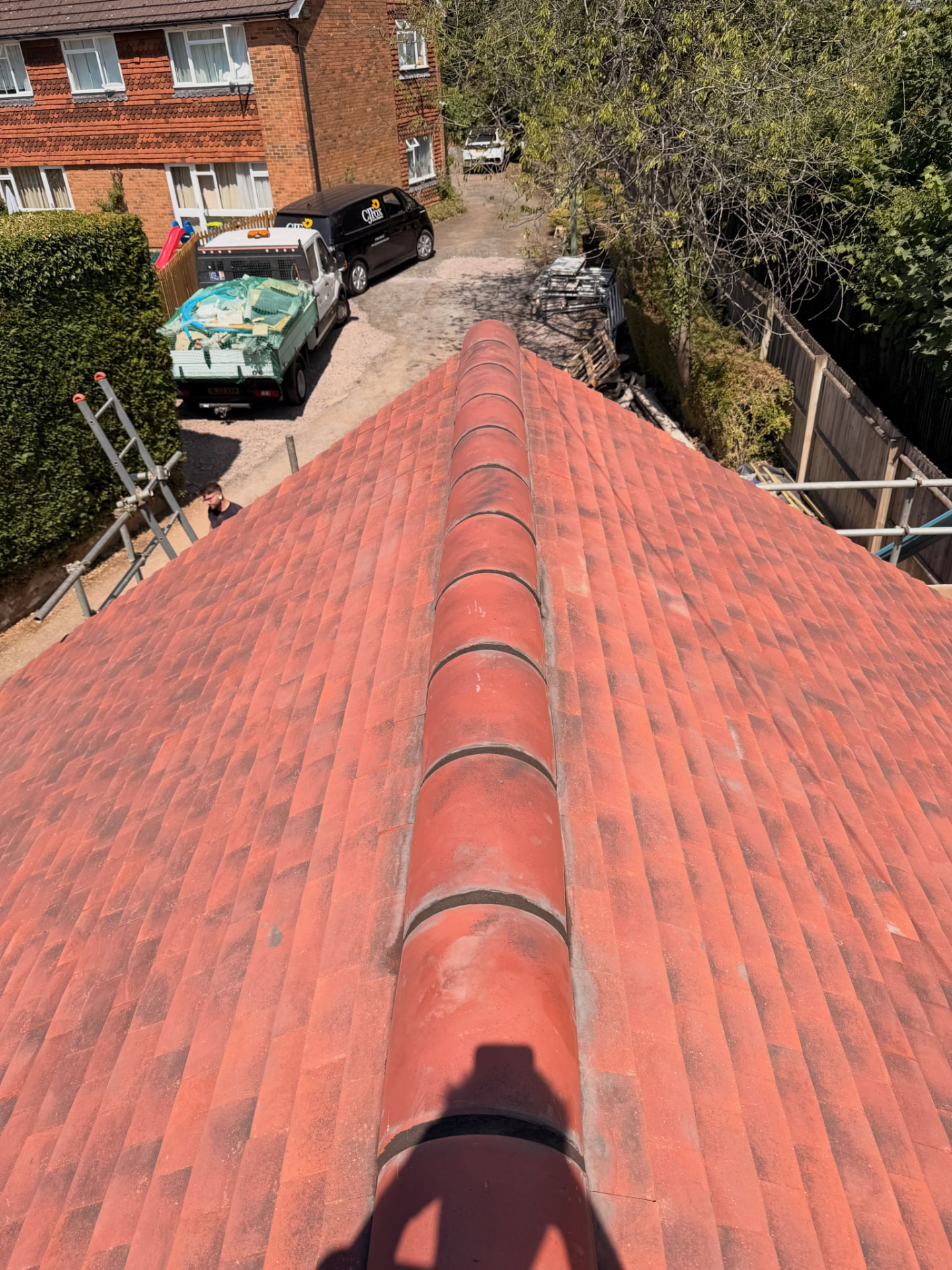
Ridge line of a completed clay tiled roof in Berkshire

Next step

Get your re-roof planned and priced properly

Book an inspection and you will get a full photographic survey of your roof structure and one fixed price for the complete project. Free in most cases, and no obligation to proceed.

  • Fixed-price quotes only, no day rates
  • Photographic report with every inspection
  • £2 million public liability cover
  • 10-year workmanship guarantee on re-roofs, new roofs and major works

151 Larchfield Road, Maidenhead, Berkshire, SL6 2SJ · Mon–Sat, 7am–10pm

Call NowFree Quote