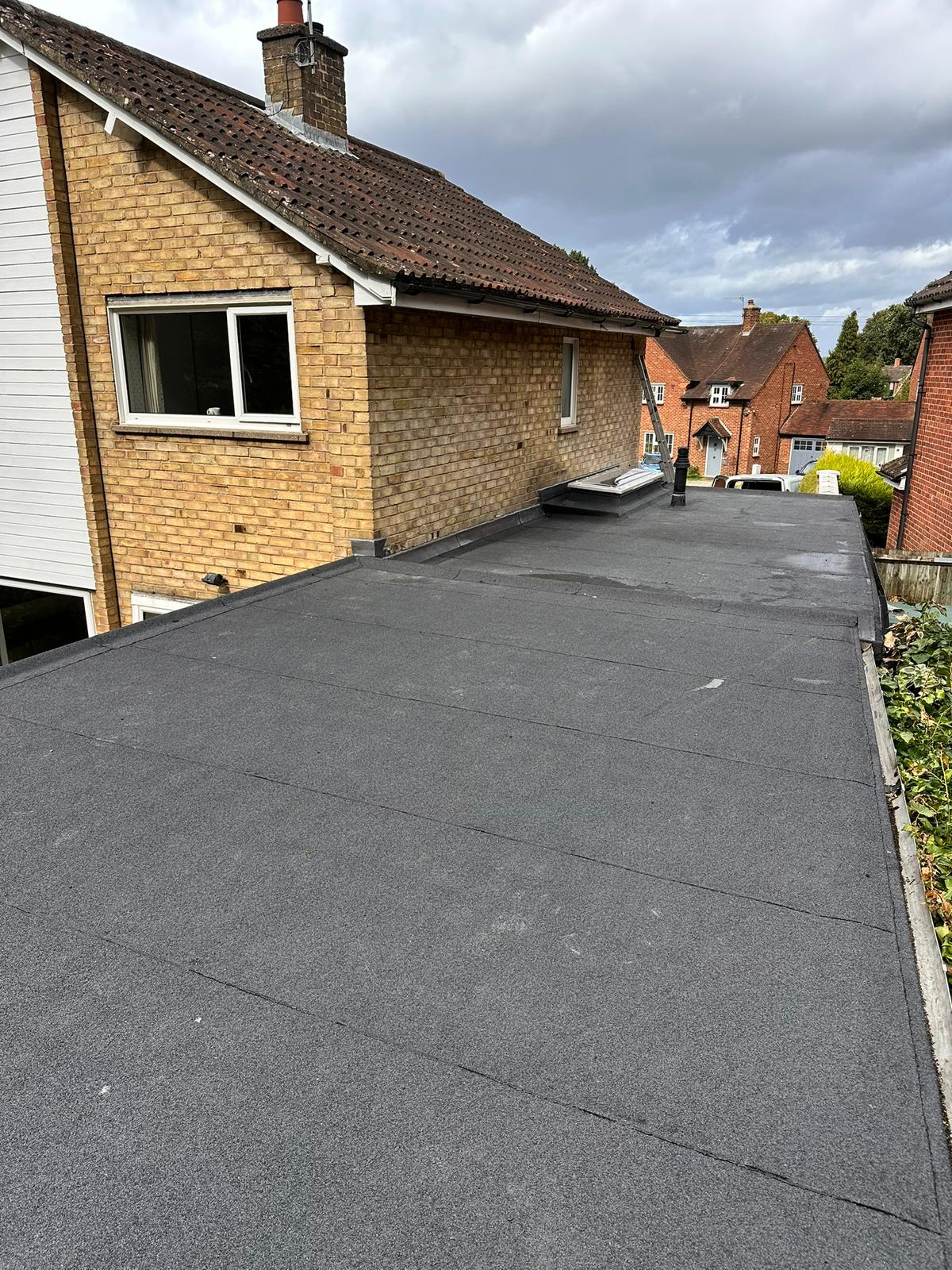
Completed flat roof covering alongside a pitched tiled roof and chimney on a brick house

Flat Roofing
In Maidenhead & Berkshire
Built To Shed Water, Not Hold It

Most flat roof failures are not a bad membrane, they are bad falls, a blocked outlet or an upstand that was never dressed correctly. We inspect the whole detail, not just the surface, and quote the repair or replacement at one fixed price.

Traditional materials specialists · Photographic report on every inspection · Fixed-price quotes, never a day rate

15+ years

Experience, with 30+ combined years across the team

£2 million

Public liability insurance cover

10-year guarantee

Workmanship guarantee on re-roofs, new roofs and major works

Fixed price

Quoted work only, never a day rate

Photo report

Photographic evidence with every inspection

Recent work

Flat Roofing we have completed

Completed flat roof covering alongside a pitched tiled roof and chimney on a brick house

Service overview

What flat roofing work actually involves

Flat roofing covers garages, extensions, dormer cheeks, bay window tops, porches and, on larger properties, whole rear or side additions. It includes both repair, patching a split, resealing an upstand, clearing and resetting an outlet, and full replacement, where the existing covering, and often the decking and insulation beneath it, is stripped back and rebuilt from the structure up.

A flat roof is never actually flat. It relies on a designed fall, typically towards one or more outlets or a gutter edge, to move water off before it can pool. Where that fall is wrong, too shallow, reversed by a sagging deck, or interrupted by a step at an upstand, water sits. Standing water is the single biggest cause of flat roof failure, because it finds every pinhole, lap and fixing that a roof shedding water quickly would never trouble.

We treat a flat roof as a system: decking, insulation, vapour control where fitted, the waterproof covering, and the upstands, outlets and trims that tie it all together. A repair that only addresses the visible split without checking the fall and the upstand behind it is a repair that fails again within a season or two. Where the decking has gone soft or the falls are wrong, we say so and quote what is actually needed rather than resurfacing over a structural problem.

Who this is for

  • Homeowners with a garage, extension or dormer flat roof that is ponding, blistering or leaking
  • Owners of period and listed properties with flat-roofed additions needing sympathetic replacement
  • Landlords and letting agents needing a flat roof assessed and evidenced before committing spend
  • Buyers and sellers whose survey has flagged a flat roof section as a concern
  • Anyone whose flat roof has been patched before and is leaking again

When it is needed

  • Standing water still visible on the roof more than 48 hours after rain has stopped
  • Blistering, cracking or splitting in the surface, especially around laps and edges
  • Damp patches on ceilings below a garage, extension or dormer roof
  • Vegetation, moss or algae taking hold, which usually means water is sitting rather than running off
  • A flat roof covering reaching or past 15-20 years old, or already carrying more than one previous patch

The cost of leaving it

What a neglected flat roof costs you

Flat roofs fail differently to pitched ones. Because water sits rather than sheds, a small defect stays wet for days at a time instead of draining away in minutes, and the damage underneath builds accordingly.

Standing water finds every weak point

A pinhole that would be harmless on a steep pitch becomes a permanent drip when it sits under ponded water for days after every rainfall. The longer the fall problem goes unaddressed, the more of the covering is affected.

Decking rots from underneath

Timber decking that stays wet loses its structural integrity from the underside, often well before any sign shows on the surface. By the time the covering visibly sags, the deck beneath it may already need full replacement.

Insulation loses its purpose

Wet insulation stops performing and can hold moisture against the underside of the deck indefinitely, which accelerates rot and makes the room below colder and damper, not warmer.

Upstands and abutments fail next

Water held against an upstand for long periods works into the wall behind it, so a flat roof problem becomes a damp problem in an adjoining wall or ceiling that looks unrelated until it is traced back.

Small repairs stop being viable

Once decking and insulation are compromised, a resurfacing repair is no longer possible and the job becomes a full strip and rebuild, at considerably more cost than addressing the fall or outlet years earlier.

Common mistakes we are called in to undo

  • Resurfacing over ponding without correcting the fall that caused it
  • Ignoring a blocked outlet because water is still finding a way off eventually
  • Patching the visible split without checking the upstand and lap either side of it
  • Ignoring soft or springy decking underfoot and assuming the covering alone is at fault
  • Painting over a felt roof with a bituminous coating instead of dealing with the underlying defect
  • Accepting a day-rate patch with no diagnosis of why the roof failed there

Our process

How we run the job, step by step

  1. 01

    Step 1, Inspection

    We inspect the covering, the falls, every upstand and outlet, and the decking condition where it can be assessed, and photograph what we find. Free in most cases; jobs needing special access to inspect safely may differ and we tell you before we attend.

  2. 02

    Step 2, Diagnosis and photographic report

    We identify whether the problem is the covering, the fall, an outlet, an upstand, the decking, or a combination, and record it photographically so you can see exactly what is wrong and why.

  3. 03

    Step 3, Fixed-price written quote

    One figure covering the specified repair or replacement, including any decking or fall correction needed, with anything excluded stated clearly. No day rates.

  4. 04

    Step 4, The works

    Typically two to three of our tradespeople on site. The area is protected, the roof kept weathertight throughout, and falls, upstands and outlets are corrected as part of the work, not left as they were found.

  5. 05

    Step 5, Verification and sign-off

    We check water is running to the outlets correctly, clear the site and walk the finished work with you, with photographs of the completed job. Major works carry our 10-year workmanship guarantee; smaller repairs are confirmed in writing on a job-by-job basis.

What you get

The practical difference on your roof

Water off the roof, not sitting on it

Correcting falls and outlets rather than just patching the surface means the roof actually sheds water afterwards instead of failing again at the next heavy rain.

The structure underneath is protected

Catching decking and insulation problems early, before they spread, avoids the far larger cost of a full strip-out once rot has taken hold.

One price, agreed before we start

Fixed-price quoting on repairs and full replacements alike, so there is no day-rate creep if a job takes longer than expected.

Work fits the property

Garage, extension, dormer and bay-top roofs are detailed to suit the building they sit against, including upstands into existing brickwork and abutments to slate or tile above.

Evidence you can keep

Photographs of the diagnosis and the finished roof, useful for your own records, for a landlord, a buyer or an insurer.

Safety kept off your shoulders

Proper access equipment, trained tradespeople and £2 million public liability cover on every job, including confined garage and extension roofs.

The detail

Flat roofing in detail

Flat roofs fail at predictable points once you understand how water is meant to move across them. Getting the falls, upstands and outlets right matters more than which covering sits on top.

Warm deck versus cold deck construction

A cold deck roof has the insulation below the deck, in the void, with ventilation to stop condensation building up against the underside of the covering. A warm deck roof has the insulation above the deck and below the waterproof covering, which removes the cold void and the ventilation requirement but depends on a vapour control layer being correctly positioned to stop moisture rising into the insulation from inside the building.

Older flat roofs on extensions and garages are very often cold deck construction with inadequate ventilation, which is a common cause of condensation being mistaken for a leak. Where we replace a roof, the construction type is chosen to suit the building and the way the room below is used, not fitted as a default.

Falls and drainage

A flat roof needs a minimum fall to move water to its outlets before it can pool, typically formed either by the structural timbers themselves or by a layer of tapered insulation or firrings laid to create the slope. Where an existing roof has no meaningful fall, or the fall has been lost because the deck has sagged, resurfacing without correcting it simply reproduces the same ponding in the same place.

Outlets, whether a simple overflow pipe through a parapet, a rainwater outlet into a hopper, or a run into an eaves gutter, need to be sized and positioned so water clears quickly, and kept clear of leaves and debris that collect on a flat surface far more readily than on a pitch.

Upstands, abutments and edge details

Every point where a flat roof meets a wall, parapet or adjoining pitched roof is an upstand or abutment, and these are where the majority of flat roof leaks actually start rather than in the open field of the covering. The covering has to be dressed up the upstand to a sufficient height and finished with a properly formed trim or flashing so wind-driven rain and any temporary ponding cannot get behind it.

Where a flat roof abuts brickwork, the covering is usually taken into a chased or raked joint and secured, rather than simply run up and sealed to the face, so that movement in the building does not pull the detail open over time.

Decking condition and structural checks

The waterproof covering only performs as well as what it sits on. Timber decking that has softened from long-term damp, or that flexes noticeably underfoot, needs to be identified before a new covering goes down, because covering over failing decking guarantees an early repeat failure and hides the problem from view.

Where decking is sound but insulation is missing, thin, or wet, replacing it as part of the works improves the performance of the roof and protects the new covering from being compromised by moisture rising from below.

Where flat roofing is used

The most common applications are garages, single-storey rear and side extensions, dormer cheeks and tops, bay window roofs, porches, and balconies. Each has its own constraints: a garage roof usually has straightforward access and few upstands, while a dormer or bay top has multiple abutments, tight falls and very little margin for error in the detailing.

On larger or older properties we also see flat-roofed link sections between a main house and an outbuilding or garage, which often carry the same neglect as smaller roofs simply because they are less visible from ground level.

Residential, commercial and heritage considerations

On homes, the priority is usually a straightforward repair or replacement that stops the leak and lasts. On commercial and mixed-use buildings we plan around access, trading hours and larger roof areas, but the underlying diagnosis, falls, upstands, outlets and decking, does not change.

On period and listed properties, flat-roofed additions are frequently later extensions to an older building, and the priority is making sure the new roof does not compromise the abutting original fabric, particularly where it meets natural slate, clay tile or existing leadwork. We do not promise a manufacturer's product warranty on any flat roof covering; our 10-year workmanship guarantee on major works covers how the roof is installed and detailed.

Questions

Flat Roofing, your questions answered

Something not covered here? Call 07711 933023 and ask. We would rather answer it honestly on the phone than have you guess.

How much does a flat roof repair or replacement cost in Maidenhead?+

It depends on the size of the roof, the covering, and whether the decking and falls need correcting alongside the surface. We inspect before quoting so the figure reflects what your roof actually needs, and it is given as one fixed price rather than a day rate.

Is the inspection and quote free?+

Quotes and inspections are free in most cases. Jobs needing special access to inspect safely, such as a high or awkward flat roof, may differ, and we tell you that before we attend.

How long does a flat roof replacement take?+

A single garage or small extension roof is often completed within a day or two. Larger areas, or work that includes decking replacement or fall correction, take longer, and the expected duration is given with the quote.

Do you guarantee flat roofing work?+

Our 10-year workmanship guarantee applies to major works such as a full flat roof replacement. Smaller repairs are not covered by that guarantee unless we confirm otherwise in writing for your specific job. We do not offer a manufacturer's product warranty on the covering material itself.

How long should a flat roof last?+

This depends heavily on how well the falls, upstands and outlets were detailed originally, as much as on the covering itself. A correctly detailed roof, with water moving off it properly, should give a long service life; a roof with poor falls will keep failing regardless of how many times the surface is renewed.

Can you repair a small area rather than replace the whole roof?+

Often, yes, provided the decking is sound and the fall in that area is correct. Where the fall is wrong or the decking has failed, patching the visible defect alone will not resolve it, and we will tell you that plainly before quoting.

Is standing water on my flat roof normal?+

Some minor pooling can clear within a day on certain roofs, but water still sitting after 48 hours usually indicates a fall problem. It is one of the most common causes of premature flat roof failure and worth having checked.

Can you attend urgently if my flat roof is leaking during a storm?+

Emergency repairs are available for storm damage and active leaks. Call us and we will give you an honest answer on when we can attend rather than a fixed response-time promise.

Do you work on flat roofs at listed or period properties?+

Yes. Flat-roofed extensions and additions on period and listed properties are handled with attention to how the new roof meets the surrounding original fabric, including existing slate, tile and leadwork.

Do you cover my area?+

We work from Maidenhead across Berkshire, Buckinghamshire, Surrey, Hampshire and Oxfordshire, including Reading, Windsor, Slough, High Wycombe and Henley-on-Thames. Just outside that? Call and we will tell you honestly whether we can help.

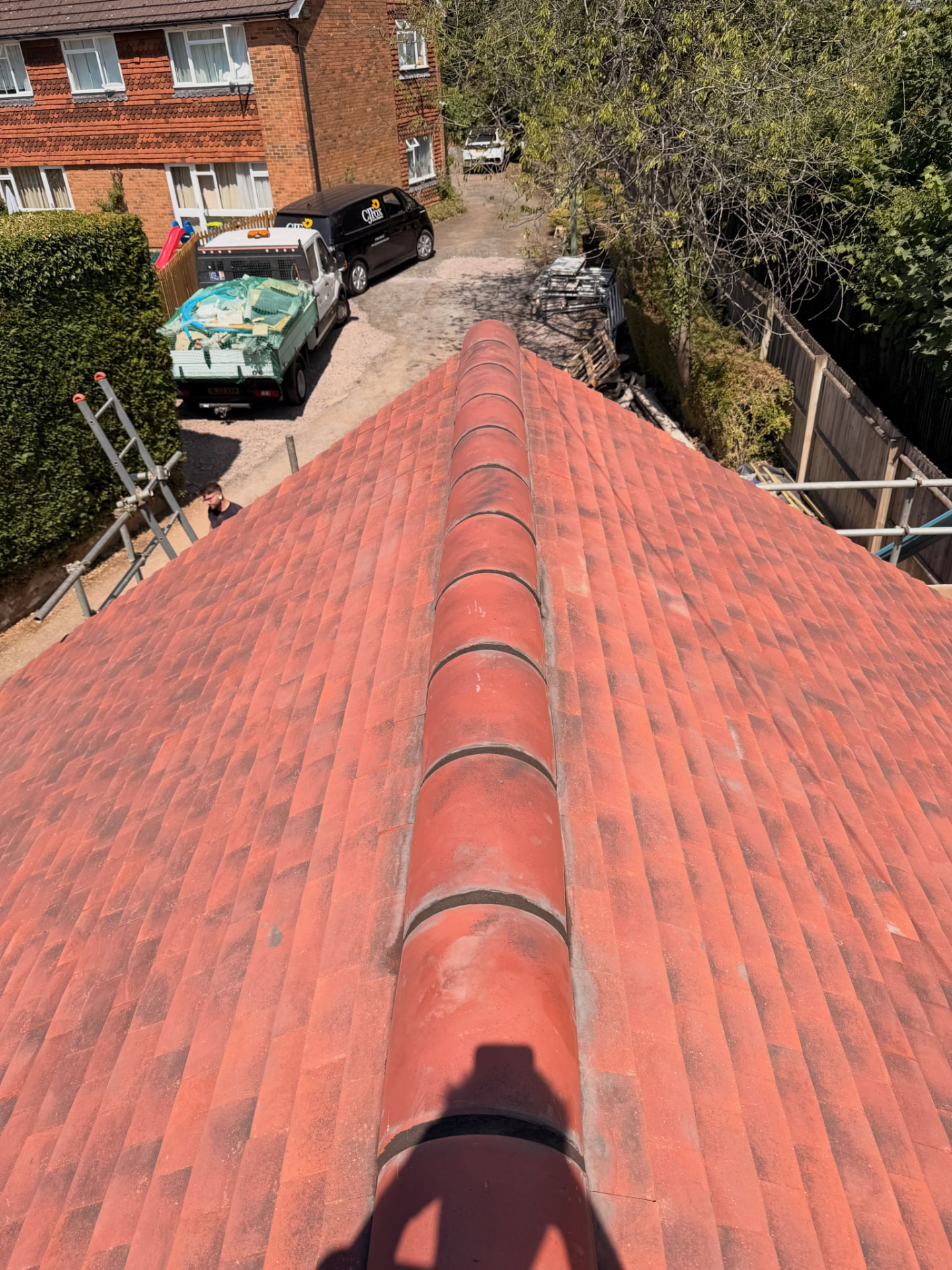
Ridge line of a completed clay tiled roof in Berkshire

Next step

Get your flat roof draining properly again

Book an inspection and you will get a photographic report showing exactly why your flat roof is failing, with one fixed price to put it right. Free in most cases, and no obligation to proceed.

  • Fixed-price quotes only, no day rates
  • Photographic report with every inspection
  • £2 million public liability cover
  • 10-year workmanship guarantee on re-roofs, new roofs and major works

151 Larchfield Road, Maidenhead, Berkshire, SL6 2SJ · Mon–Sat, 7am–10pm

Call NowFree Quote