Terracotta ridge tiles bedded along the ridge of a clay tiled roof

Ridge Repointing
In Maidenhead & Berkshire
Mortar That Actually Stays Put

Blown ridge pointing is rarely a one-off fault; it is usually the wrong mix, the wrong gauge or bedding done in haste. We re-bed and repoint properly, with the mortar matched to your roof and the ridge tiles refitted correctly, so the next storm does not undo the work again.

Traditional materials specialists · Photographic report on every inspection · Fixed-price quotes, never a day rate

15+ years

Experience, with 30+ combined years across the team

£2 million

Public liability insurance cover

10-year guarantee

Workmanship guarantee on re-roofs, new roofs and major works

Fixed price

Quoted work only, never a day rate

Photo report

Photographic evidence with every inspection

Recent work

Ridge Repointing we have completed

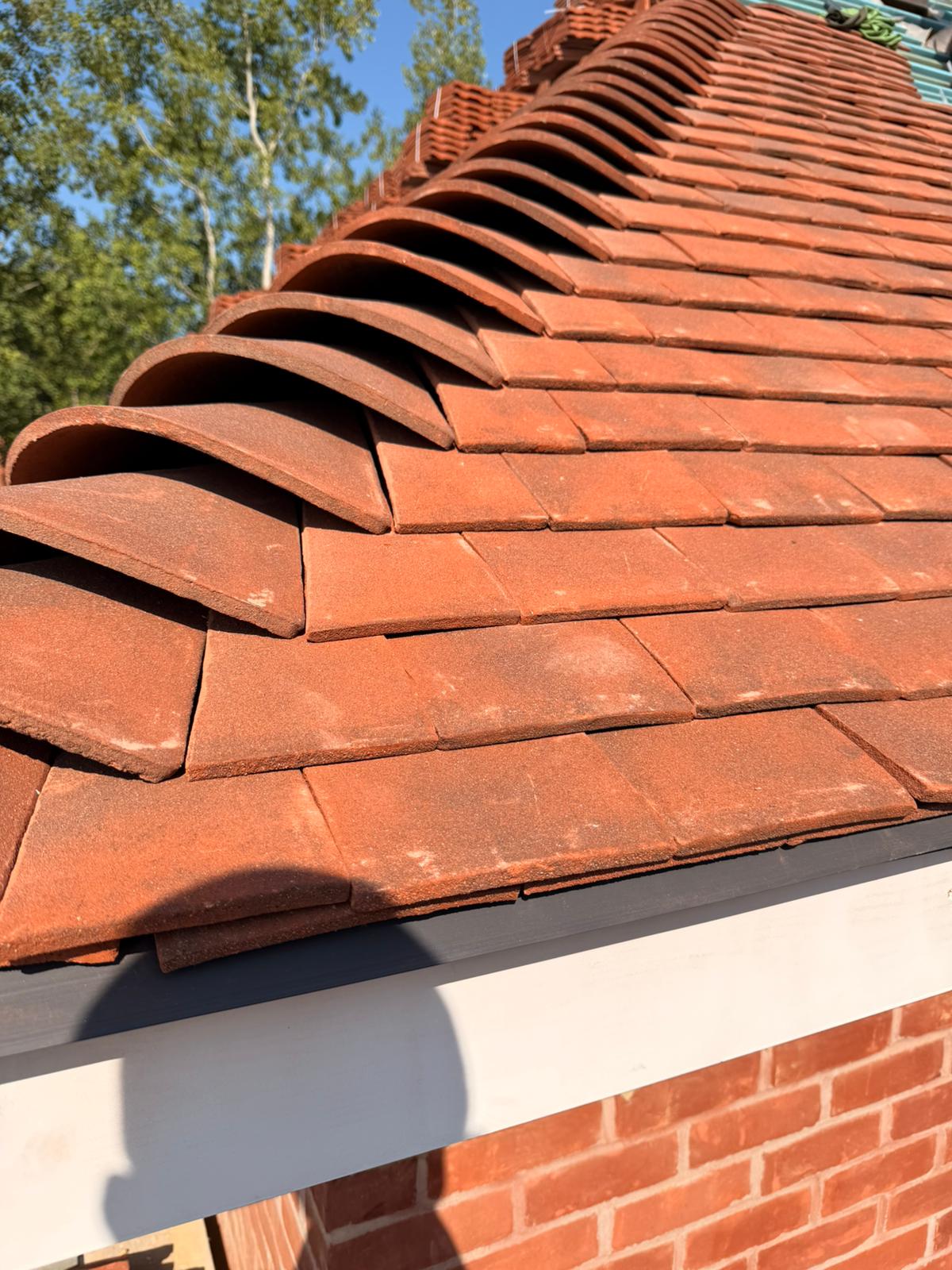
Terracotta ridge tiles bedded along the ridge of a clay tiled roof
Close view of half-round ridge tiles set over flat clay roof tiles
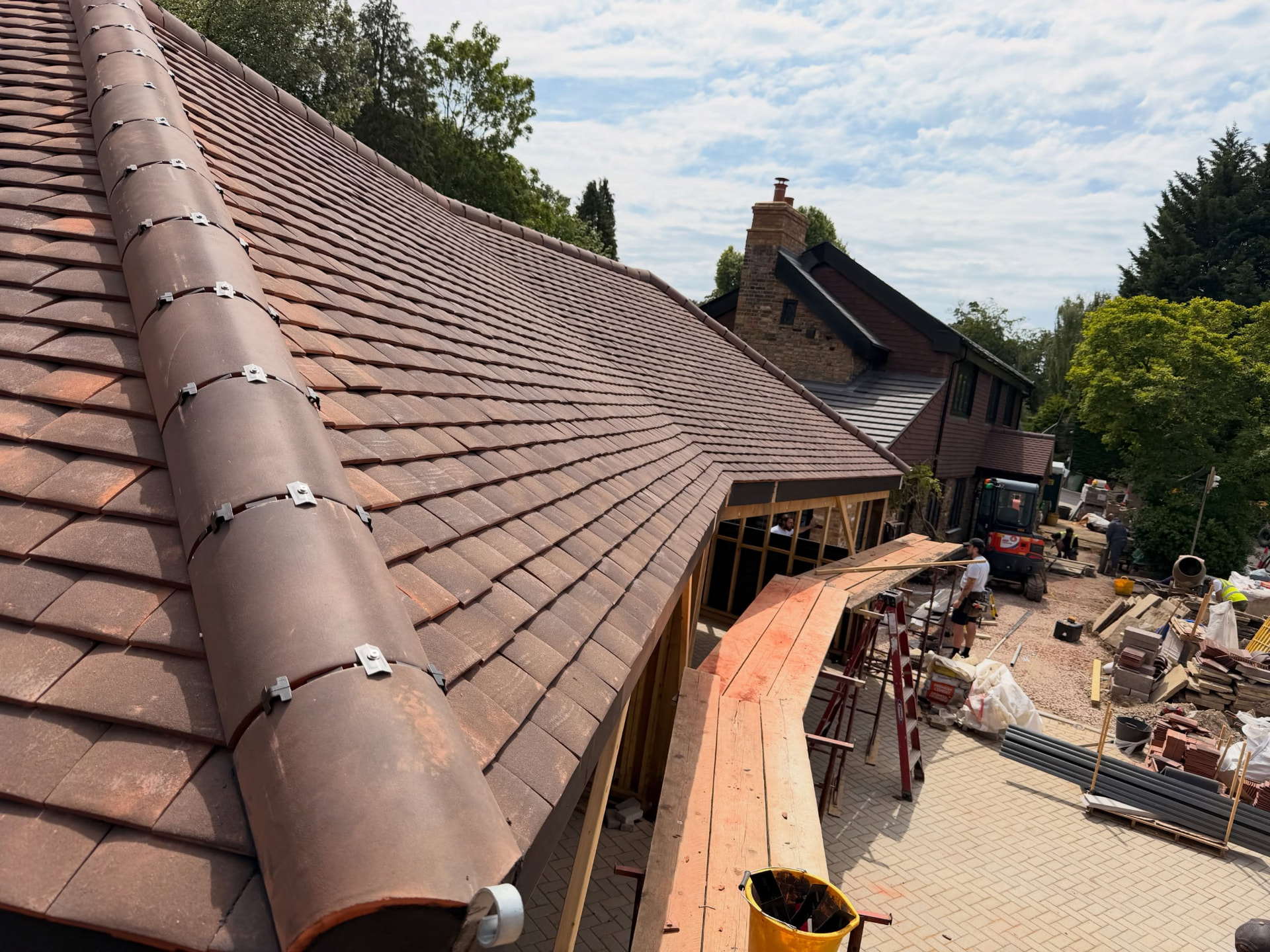
Dry-fixed ridge tiles mechanically secured along a brown tiled roof
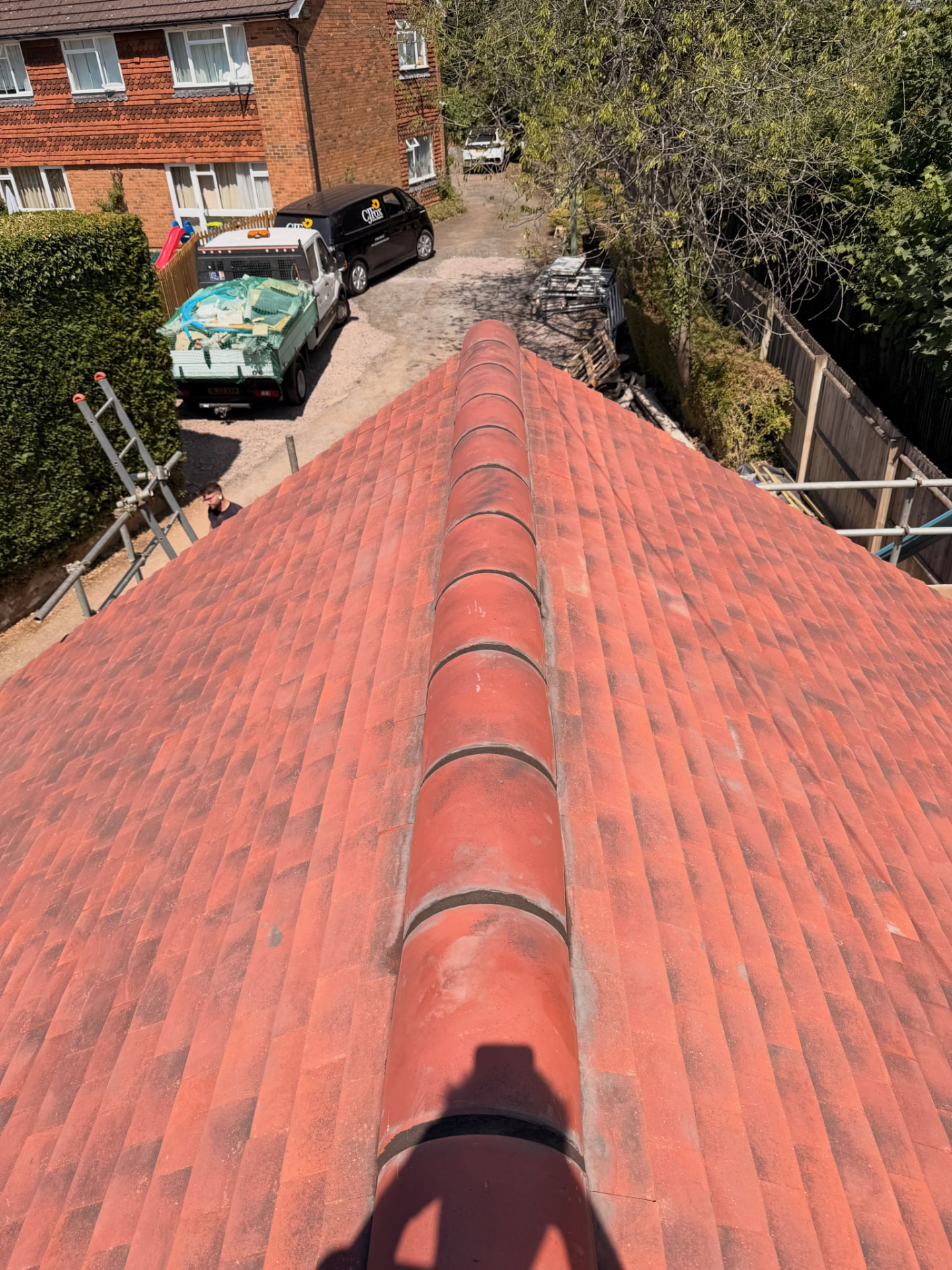
Bedded half-round ridge tiles running the full length of a re-tiled roof

Service overview

What ridge repointing actually involves

The ridge is the capping that runs along the apex of the roof, bedded on mortar over the top course of tiles or slates on each slope. Hips, the sloping external corners of a roof, are finished the same way. That mortar bed does two jobs: it holds the ridge tiles in place against wind uplift, and it seals the junction where the two roof slopes meet, which is one of the wettest points on the entire roof. When the mortar fails, both jobs stop happening at once.

Repointing is not simply smearing fresh mortar over the cracks in the old. Done properly, it means raking out the failed material back to sound bedding, cleaning the joint, and rebuilding it with a mortar mixed and gauged for the job, strong enough to hold the ridge secure, but not so strong or so impermeable that it cracks the ridge tiles or traps moisture underneath them. Where the bedding itself has failed rather than just the pointing, the ridge tiles are lifted, the old mortar removed entirely, and the ridge is re-bedded from scratch on a fresh mortar bed before pointing.

We see two patterns of failure most often. The first is age and weather: lime or cement mortar exposed at the highest, most wind-loaded point of the roof for twenty or thirty years eventually cracks, shrinks and lets water in, and each freeze-thaw cycle through winter widens the crack. The second is a mortar that was wrong for the job from the start, too rich a cement mix that has no give in it, bedded too thin, or applied to a ridge that was never properly cleaned first, so it never bonded. Both look the same from the ground: hairline cracks, loose ridge tiles, and pointing that has visibly lifted or gone missing in short lengths.

Who this is for

  • Homeowners who can see cracked, crumbling or missing mortar along the ridge or hips from the ground or in photographs
  • Owners of period, listed and conservation-area properties needing ridges repointed in an appropriate, correctly gauged mortar
  • Anyone who has heard a ridge tile move, rock or rattle in high wind
  • Landlords and letting agents dealing with a leak or damp report that traces back to the ridge line
  • Buyers and sellers whose survey has flagged loose or deteriorating ridge pointing

When it is needed

  • Visible cracking, crumbling or gaps in the mortar along the ridge or hips
  • A ridge tile that has slipped, rocked loose or come off completely, especially after high winds
  • Damp staining on a loft ceiling or in a roof void directly below the ridge line
  • Sand or mortar debris collecting in gutters below the ridge or hips
  • A ridge that has been patched with a smear of cement in the past and is failing again

The cost of leaving it

What happens if blown ridge pointing is left

The ridge sits at the highest point of the roof, fully exposed to wind, rain and frost, so a failure there does not stay small. Once the mortar bond goes, the ridge tiles themselves are only held on by gravity and whatever grip remains, and water has a direct route into the roof timbers below.

Ridge tiles lift and slide in wind

Once the mortar keying is gone, a ridge tile is no longer mechanically fixed against uplift. In a storm it can shift, slide down the slope, or come off the roof entirely, which is both a falling-object hazard and an open gap for driving rain.

Water tracks straight into the roof void

The ridge sits directly over the apex timber and the top course of the roof covering on both sides. A failed joint lets water run down the inside of the felt or underlay and soak battens, rafter tops and insulation before it ever shows as a stain inside the house.

Freeze-thaw widens every crack over winter

Water sitting in a cracked mortar joint expands when it freezes, widening the crack. Each winter the same joint gets worse, which is why ridge pointing that looked minor in autumn can be badly failed and dropping debris by spring.

Loose ridge tiles damage the roof beneath them

A ridge tile that has come loose can crack the top course of slates or tiles as it shifts, or fall and break slates lower down the slope, turning a pointing repair into a covering repair as well.

Repeated cement patches make the next repair harder

Smearing fresh cement over failed pointing without raking it out properly traps moisture behind the new layer, so it fails again within a season or two, and each patch adds material that has to be removed before a proper repair can be done.

Common mistakes we are called in to undo

  • Smearing new mortar over old failed pointing instead of raking it out to sound material first
  • Using a strong, dense cement mortar with no flexibility, which cracks the ridge tiles it is meant to protect
  • Bedding ridge tiles too thin, so there is not enough mortar to hold them securely
  • Pointing without cleaning the joint first, so the new mortar never bonds to the tile or the slope below
  • Ignoring a single loose ridge tile because the rest of the run looks sound
  • Sealing the ridge completely with an impermeable mortar on a roof that relies on ridge ventilation, trapping moisture in the loft

Our process

How we run the job, step by step

  1. 01

    Step 1, Inspection

    We get onto the roof and examine the ridge and hips section by section: which joints have failed, whether any ridge tiles are loose or cracked, and whether water has already reached the timbers below. We check the loft where access allows. Free in most cases; jobs needing special access to inspect safely may differ and we tell you before we attend.

  2. 02

    Step 2, Photographic report

    You receive photographs of every failed joint and loose tile we find, so you can see the actual condition of the ridge rather than take our word for it, and can compare our findings against anyone else's assessment.

  3. 03

    Step 3, Fixed-price written quote

    One figure covering the length of ridge and hip to be repointed or re-bedded, the mortar specification, and how many ridge tiles need replacing. No day rates, and anything found once we start that changes the scope is agreed with you in writing before we proceed.

  4. 04

    Step 4, Re-bedding and repointing

    Typically two to three of our tradespeople on site. Failed mortar is raked out to sound bedding, the joint is cleaned, and ridge tiles are re-bedded or repointed with a correctly gauged mortar mix suited to your roof. Cracked or missing ridge tiles are replaced with matched units.

  5. 05

    Step 5, Verification and sign-off

    We check every joint along the completed run, clear the site of debris, and walk the finished work with you with photographs of the result. Major re-bedding works carry our 10-year workmanship guarantee; for smaller pointing repairs we confirm in writing what is covered for your specific job.

What you get

The practical difference on your roof

The ridge stays secure in wind

Correctly bedded and pointed ridge tiles are mechanically held, not just resting on old mortar, so they stay put through the winter storms that actually test a roof.

The apex of the roof stops leaking

Sealing the wettest junction on the roof properly stops water tracking into the timbers below before it ever becomes a stain on a ceiling.

One fixed price for the whole run

You get a single figure covering the length of ridge and any hips, agreed before work starts. No day rates and no surprise additions.

A mortar mix that will actually last

Correctly gauged mortar, matched to your roof rather than a generic strong mix, means the repair holds for years instead of cracking again within a season.

Matched ridge tiles on period roofs

Where tiles need replacing, we match them to what is already on the roof so the repaired section does not stand out from the street.

Work done safely at height

The ridge is the highest, most exposed part of the roof. Proper access equipment, trained tradespeople and £2 million public liability cover mean the risk stays off you.

The detail

Ridge repointing and re-bedding in detail

The ridge looks like a simple detail from the ground, but the choice of mortar, the method of bedding and the way it interacts with ventilation all determine whether the repair lasts five years or twenty.

Bedded versus dry-fix ridge systems

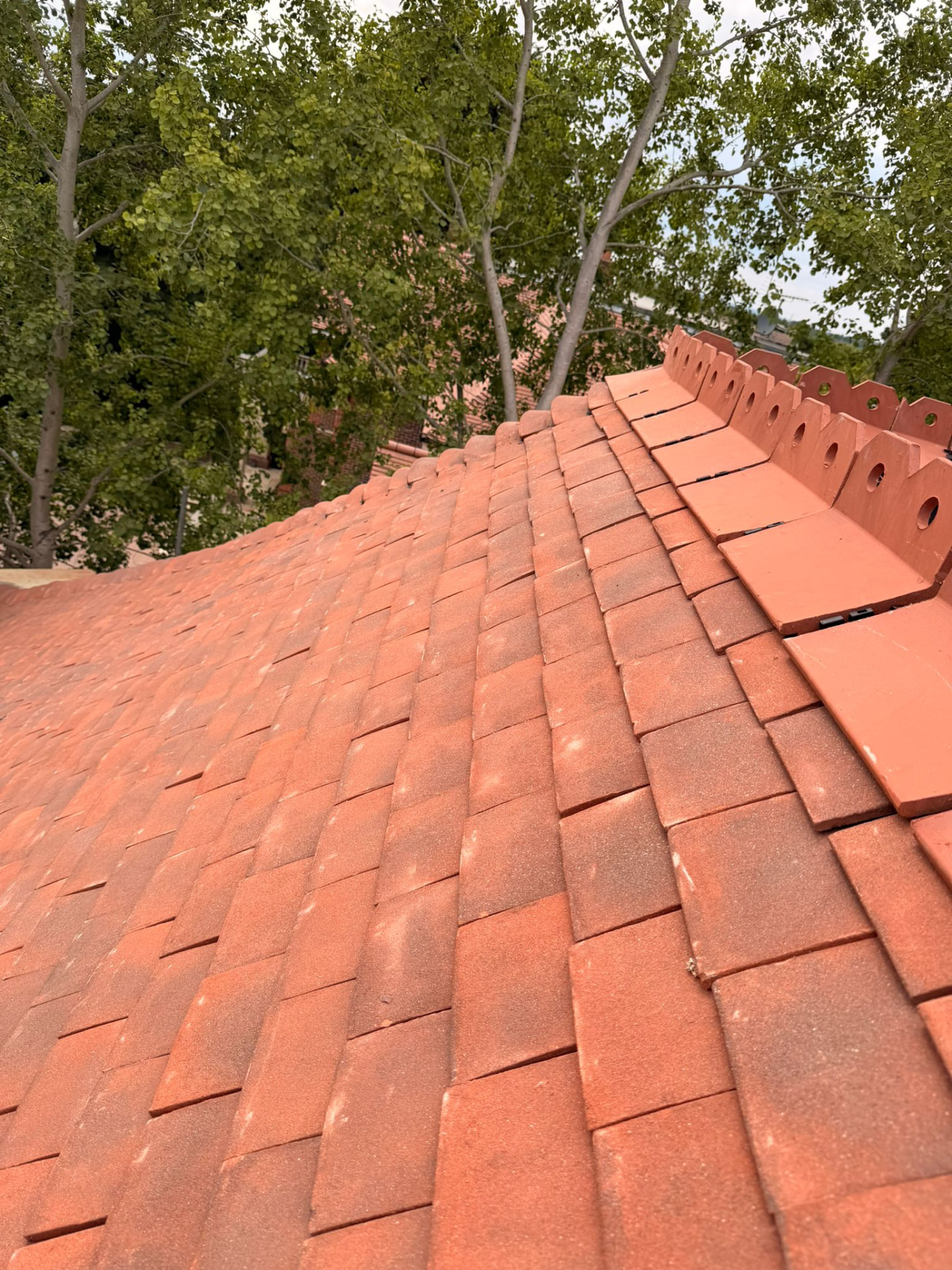
Traditional bedded ridges are mortar-fixed: the ridge tiles sit on a mortar bed laid over the top course of slates or tiles, and pointed at the joints between tiles. This is the standard method on period and listed roofs and the majority of the traditional roofs we work on, and it is what repointing and re-bedding restores.

Dry-fix ridge systems use mechanical clips and a dry union strip instead of mortar, avoiding the maintenance cycle that bedded ridges need but changing the appearance of the roofline, which is why they are rarely appropriate on period or listed properties. Where a roof already has dry-fix ridges, failures are a fitting or clip issue rather than a pointing issue, and we assess and quote that separately.

Mortar mixes and gauging

The right mortar for a ridge is gauged for the materials either side of it, strong enough to hold the ridge tiles secure against wind uplift, but with enough flex and permeability that it does not crack the tiles or seal moisture in. A mix that is too strong and too dense is one of the most common reasons ridge pointing fails within a couple of years: it cracks rather than flexes, and once cracked it lets water straight in.

On period and listed roofs we gauge the mortar to suit lime-based or traditional practice where that is what the roof was built with, rather than defaulting to a modern strong cement mix that would be inappropriate for the building and could damage older tiles.

Hips and verges

Hips, the external sloping corners where two roof planes meet, are bedded and pointed the same way as ridges and fail for the same reasons, but they carry more water off two slopes at once, so a failed hip often leaks faster than a failed ridge run of the same length.

Verges, where the roof covering meets a gable end, are sometimes bedded in mortar too and are prone to the same cracking and blowing. Where a verge is failing alongside the ridge, we quote it as part of the same visit rather than leaving you to find it separately later.

Ridge ventilation

Many roofs rely on a small continuous gap or vented ridge system to let the roof void breathe and prevent condensation building up under the covering. Sealing a ridge completely with an impermeable mortar can trap that moisture inside the loft, which causes its own problems even though the ridge itself no longer leaks.

Where a roof has ridge ventilation built in, we re-bed and repoint around it rather than over it, so the repair fixes the leak without creating a damp problem in the roof space.

Why blown pointing recurs

The most common reason a ridge fails again soon after being 'repaired' is that the old mortar was never removed, new material was smeared over the top of failed pointing, which never bonds properly and traps moisture behind it. The second most common reason is the wrong mix: too strong, too thin, or applied without cleaning the joint first.

A proper repair removes all the failed material back to sound bedding, cleans the surfaces, and rebuilds the joint with a correctly gauged mix. That is more work than a smear-over repair, but it is the difference between a repair that lasts and one that needs doing again in eighteen months.

Residential, commercial and listed buildings

On homes, ridge repointing is usually a single visit covering the full ridge and any hips in one trip, with ridge tiles matched to the existing roof. On commercial and mixed-use buildings, longer ridge runs and multiple hips mean the access planning and sequencing take more thought, but the method does not change.

On period, listed and conservation-area properties, ridge repointing is a specialism rather than an afterthought: mortar gauged appropriately, matched ridge tiles where replacement is needed, and bedding methods that respect how the roof was originally built.

Questions

Ridge Repointing, your questions answered

Something not covered here? Call 07711 933023 and ask. We would rather answer it honestly on the phone than have you guess.

How much does ridge repointing cost in Maidenhead?+

It depends on the length of ridge and hip involved and how many ridge tiles need replacing, which is why we inspect and quote in writing rather than giving a figure over the phone. The quote is a single fixed price agreed before work starts, with no day rates.

Is the inspection and quote free?+

Quotes and inspections are free in most cases. Jobs needing special access to inspect safely may differ, and we tell you that before we attend.

How long does ridge repointing take?+

A single ridge run on an average house is usually completed in a day. Roofs with multiple hips, longer ridges, or ridge tiles that need full re-bedding rather than just repointing take longer, and the expected duration is given with the quote.

Do you re-bed the ridge tiles or just repoint the joints?+

Both are available depending on what the inspection finds. If the mortar bed underneath is still sound and only the pointing between tiles has cracked, repointing alone is often enough. If the bedding itself has failed, the ridge tiles are lifted and the ridge is re-bedded from scratch.

Do you guarantee ridge repointing?+

Our 10-year workmanship guarantee applies to re-roofs, new roofs and major works. Smaller repointing repairs are not covered by that guarantee unless we confirm otherwise in writing for your specific job, and we tell you which category your work falls into.

How long should repointed ridges last?+

A properly raked-out joint rebuilt with a correctly gauged mortar should last many years without needing attention. Mortar smeared over old failed pointing, by contrast, commonly fails again within a couple of seasons, which is exactly the shortcut we do not take.

Can you match the ridge tiles on an older or period roof?+

Yes, matching ridge tiles in profile and finish to what is already on the roof is standard practice on period and listed work, so a repaired section does not stand out.

Do you offer emergency repairs if a ridge tile comes off in a storm?+

Yes, emergency repairs are available for storm damage. Call us and we will give you an honest answer on when we can attend rather than a fixed response-time promise.

Will repointing affect ventilation in my loft?+

Not if it is done properly. Where a roof has ridge ventilation or a vented ridge system, we repoint around it rather than sealing over it, so the roof continues to breathe as it was designed to.

Do you cover my area?+

We work from Maidenhead across Berkshire, Buckinghamshire, Surrey, Hampshire and Oxfordshire, including Reading, Windsor, Slough, High Wycombe and Henley-on-Thames. Just outside that? Call and we will tell you honestly whether we can help.

Ridge line of a completed clay tiled roof in Berkshire

Next step

Get your ridge repointed properly, once

Book an inspection and you will get a photographic report of exactly which joints have failed and one fixed price to put it right. Free in most cases, and no obligation to proceed.

  • Fixed-price quotes only, no day rates
  • Photographic report with every inspection
  • £2 million public liability cover
  • 10-year workmanship guarantee on re-roofs, new roofs and major works

151 Larchfield Road, Maidenhead, Berkshire, SL6 2SJ · Mon–Sat, 7am–10pm

Call NowFree Quote