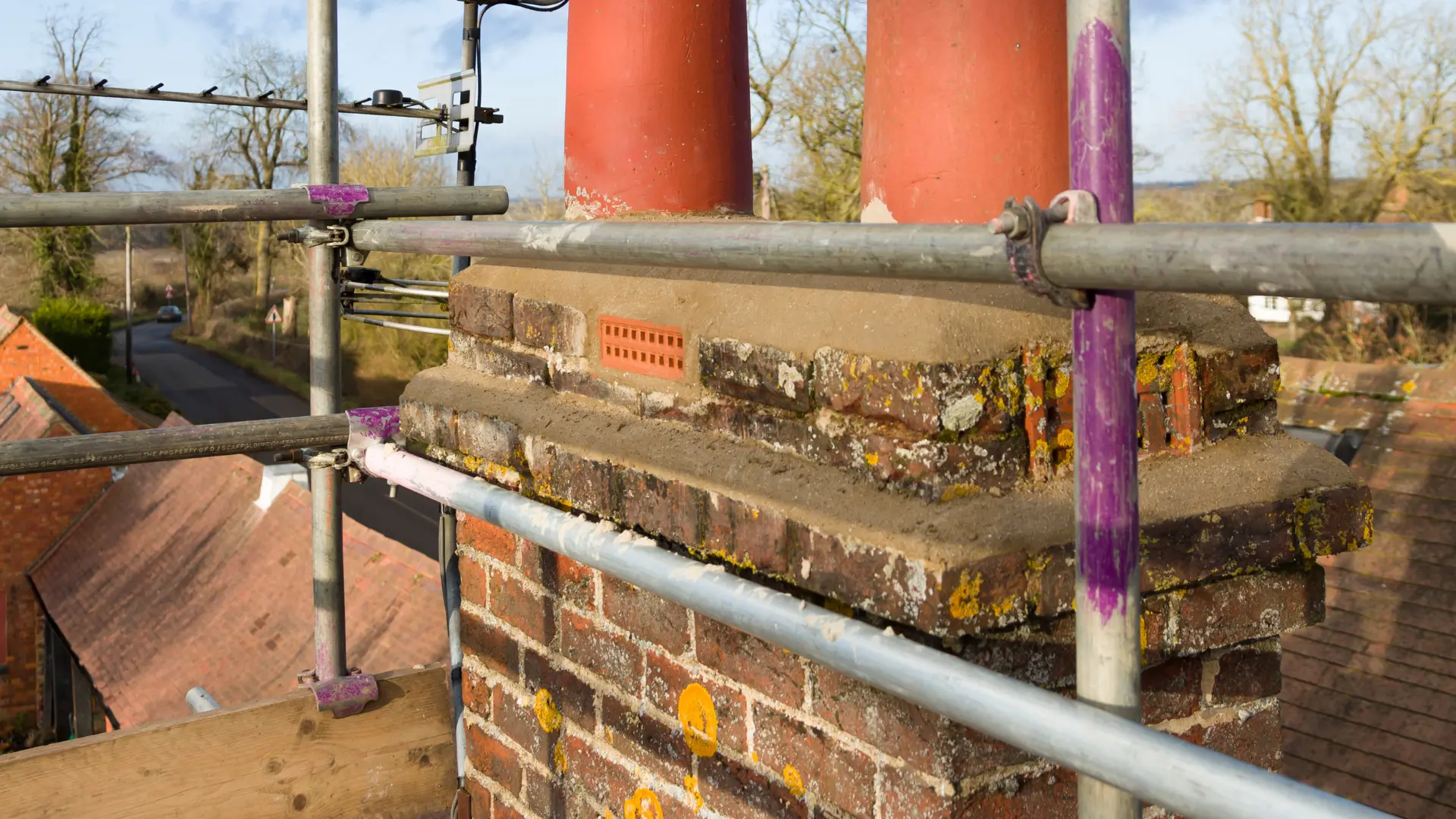
Brick chimney stack with rebuilt mortar haunching and clay pots, viewed from the scaffold

Chimney Repairs & Removal
In Maidenhead & Berkshire
The Detail Most Roofs Leak At

Chimneys move independently of the roof around them, sit fully exposed to weather on all sides, and rely on flashings and flaunching that fail quietly for years before anyone notices. We inspect the whole stack, tell you honestly what state it is in, and quote the repair, rebuild or removal at one fixed price.

Traditional materials specialists · Photographic report on every inspection · Fixed-price quotes, never a day rate

15+ years

Experience, with 30+ combined years across the team

£2 million

Public liability insurance cover

10-year guarantee

Workmanship guarantee on re-roofs, new roofs and major works

Fixed price

Quoted work only, never a day rate

Photo report

Photographic evidence with every inspection

Service overview

What chimney repair and removal actually involves

Chimney work ranges from minor repointing and a new flaunching cap through to partial and full stack rebuilds, replacement of the trays and flashings that seal the chimney into the roof, capping and venting a disused flue, and complete removal of a chimney with the roof made good beneath it. Each is a different job with a different scope, and we treat them separately rather than defaulting to the largest option.

A chimney stack stands proud of the roof and takes weather from every direction, which is why the mortar joints, brickwork and flaunching age faster than the rest of the house. The flaunching, the sloped mortar bed at the top that sheds water away from the flue, cracks and erodes over time; once it has gone, water tracks straight down inside the brickwork or the flue itself. Where a chimney meets the roof slope, lead trays and stepped or soakered flashings do the sealing, and these are a completely separate point of failure from the stack above.

Removal is a legitimate option where a chimney is no longer in use, has fallen into serious disrepair, or the owner simply wants it gone, and it is carried out down to an appropriate level with the roof structure and covering made good so the property is left weathertight and visually finished, not with a patched-over hole where a stack used to stand.

Who this is for

  • Homeowners with cracked flaunching, loose brickwork or a leaning chimney stack
  • Owners of period, listed and conservation-area properties needing sympathetic repair or rebuild
  • Anyone with a disused chimney they want safely capped, vented or removed
  • Landlords and letting agents needing a chimney assessed and evidenced before committing spend
  • Buyers and sellers whose survey has flagged the chimney as a concern

When it is needed

  • Cracked, eroded or missing flaunching at the top of the stack
  • Loose, spalling or missing bricks, or mortar joints that have washed out
  • A stack that looks to be leaning, or has visibly moved relative to the roofline
  • Damp patches on a chimney breast or in the room it passes through
  • A disused chimney that has never been capped or ventilated correctly, or one you want removed

The cost of leaving it

What a neglected chimney costs you

A chimney is one of the most exposed parts of a roof and one of the most expensive to leave, because problems there tend to affect the brickwork, the flue, the roof structure and the room below all at once.

Water tracks straight down inside the stack

Once flaunching has cracked or a flashing has failed, water gets inside the brickwork or the flue lining directly, rather than running off the outside as it should. This is very often invisible from the ground until damp appears indoors.

Brickwork and mortar deteriorate from within

Freeze-thaw cycles on saturated brickwork spall the face off bricks and wash out mortar joints from the inside out, weakening the structure of the stack well before it looks obviously damaged.

Movement becomes structural

A stack that has started to lean is a structural concern, not a cosmetic one. Left unaddressed, movement accelerates, particularly in taller or older stacks with limited ties into the roof structure.

Flashings fail and take the roof with them

Chimney trays and flashings are a common source of roof leaks entirely separate from the stack itself. A failed tray can saturate the surrounding roof timbers long before any sign shows on the brickwork above.

Disused flues cause damp and cold problems of their own

An unused chimney that has not been capped or vented correctly lets rain in directly and creates a cold air path into the building, causing damp and draughts that get blamed on other parts of the house.

Common mistakes we are called in to undo

  • Repointing the visible face while ignoring cracked flaunching at the top
  • Filling flashings with mortar or sealant instead of proper lead trays and soakers
  • Leaving a disused chimney open at the top with no cap or vent at all
  • Ignoring visible lean or movement because the stack is still standing
  • Rebuilding in mismatched brick or mortar on a period property, which stands out and can affect listed building consent
  • Accepting a day-rate repair to a chimney with no inspection of the flashings below it

Our process

How we run the job, step by step

  1. 01

    Step 1, Inspection

    We inspect the stack, the flaunching, the brickwork and mortar joints, and the trays and flashings where the chimney meets the roof, and photograph what we find. Free in most cases; jobs needing special access to inspect safely may differ and we tell you before we attend.

  2. 02

    Step 2, Diagnosis and photographic report

    We identify whether the issue is repointing, flaunching, a partial or full rebuild, the flashings, or a case for capping, venting or removing the chimney altogether, and record it photographically.

  3. 03

    Step 3, Fixed-price written quote

    One figure for the specified work, whether that is a repair, a rebuild or a removal, with materials and scope stated in writing and anything excluded made clear. No day rates.

  4. 04

    Step 4, The works

    Typically two to three of our tradespeople on site. Access and scaffolding set up properly for the height involved, the roof and property protected, and brick, mortar and lead matched to the existing building or, on a removal, the roof made good to a finished standard.

  5. 05

    Step 5, Verification and sign-off

    We check the finished stack or the made-good roof, clear the site and walk the work with you, with photographs of the completed job. Major works such as a rebuild or removal carry our 10-year workmanship guarantee; smaller repairs are confirmed in writing on a job-by-job basis.

What you get

The practical difference on your roof

The whole detail checked, not just the visible crack

Inspecting the flaunching, brickwork and flashings together means we catch the flashing failure that repointing alone would leave to keep leaking.

Structural issues caught early

Identifying movement or spalling brickwork before it worsens avoids the point where a repair is no longer viable and a full rebuild becomes the only option.

One price, agreed before we start

Fixed-price quoting on repairs, rebuilds and removals alike, so scaffolding time or unexpected weather does not change your bill.

Work that suits the building

Matched brick, mortar and hand-dressed lead on period and listed properties, so a repair or rebuild does not stand out from the original stack.

A finished roof, not a patched hole

Where a chimney is removed, the roof structure and covering are made good properly, left weathertight and visually consistent rather than tarped or boarded over.

Safety kept off your shoulders

Proper scaffolding or access equipment for the height involved, trained tradespeople and £2 million public liability cover on every job.

The detail

Chimney work in detail

Chimney problems are rarely just one thing. The stack, the flaunching and the flashings below it all age differently and need to be assessed as a set.

Repointing

Repointing replaces mortar that has eroded or washed out from between the bricks, restoring the weather seal and the structural bond of the stack. On period properties the mortar mix matters: a mortar that is too hard for soft historic brick traps moisture inside the brick and accelerates spalling, so the mix is matched to the age and material of the chimney rather than using a modern default.

Repointing is generally the right response where the brickwork itself is sound and the joints have simply weathered over time, rather than where bricks are cracked, spalling or the stack has moved.

Flaunching

Flaunching is the sloped mortar bed around the base of the chimney pots at the top of the stack, and its job is to shed rainwater away from the pots and the brickwork rather than let it pool and track down inside. It is one of the most exposed pieces of mortar on the whole house and typically the first thing to crack, particularly where a chimney has multiple pots.

Cracked or crumbling flaunching lets water directly into the top of the stack, often with no external sign lower down until damp appears in the room the chimney breast passes through. Renewing it is usually straightforward provided the brickwork beneath is sound.

Partial and full rebuilds

Where brickwork has spalled extensively, mortar has failed throughout, or the stack has developed a lean, repointing or flaunching alone will not resolve it and a rebuild is needed. A partial rebuild takes the stack down to sound brickwork, often to roof level or just below, and rebuilds from there in matched brick and mortar. A full rebuild takes the stack down to the roofline or below and reconstructs it entirely.

On listed and conservation-area properties, rebuilds are carried out in matching brick bond, brick type and mortar mix, and, where the chimney is a visible feature of the building, we take care that the rebuilt stack reads as original rather than as an obvious repair.

New trays and flashings

Where a chimney passes through a roof slope, lead cover flashings and soakers seal the sides, and a back gutter or tray, sometimes an internal tray built into the brickwork, sheds water that runs down behind the stack out onto the roof covering rather than into the building. These are frequently the actual source of a leak that gets blamed on the chimney above.

Renewing trays and flashings is code-appropriate lead, hand-dressed and detailed to the specific chimney and roof pitch, since a flashing cut for a different job rarely seals correctly on another.

Capping, venting disused stacks, and full removal

A disused chimney that is being kept should be capped to stop rain entering directly, with ventilation maintained through a vented cap or vent to prevent condensation and damp building up inside the flue, rather than sealed completely airtight.

Where a chimney is not wanted at all, full removal takes the stack down, typically to below roof level, and the roof structure and covering are made good: rafters and battens reinstated where the stack passed through, and the covering matched so the roofline reads as continuous rather than patched. This is a decision made in the open, with the finished appearance discussed before work starts, not assumed.

Residential and commercial considerations

On homes, chimney work is usually a single stack with straightforward access from a scaffold tower or roof ladder. On commercial and mixed-use buildings, particularly older shop-and-flat conversions, chimneys are often taller, shared between properties, or positioned over trading premises, which changes the access and scaffolding plan but not the underlying diagnosis.

On listed and conservation-area properties, chimneys are frequently a defining feature of the roofline, and any rebuild or removal should be considered alongside whether listed building consent is required; we specify sympathetic materials and detailing but the consent position itself sits with the owner and the local planning authority.

Questions

Chimney Repairs & Removal, your questions answered

Something not covered here? Call 07711 933023 and ask. We would rather answer it honestly on the phone than have you guess.

How much does chimney repair or removal cost in Maidenhead?+

It depends on the scope, whether that is repointing, flaunching, a partial or full rebuild, new flashings, or removal, and on access and height. We inspect before quoting so the price reflects the actual condition of your chimney, given as one fixed figure rather than a day rate.

Is the inspection and quote free?+

Quotes and inspections are free in most cases. Jobs needing special access to inspect safely, such as a tall or steeply pitched chimney, may differ, and we tell you that before we attend.

How long does chimney work take?+

Repointing or new flaunching on a single stack is often completed within a day. Rebuilds and removals take longer, particularly once scaffolding access and making good the roof are included, and the expected duration is given with the quote.

Do you guarantee chimney repairs?+

Our 10-year workmanship guarantee applies to major works such as a chimney rebuild or removal. Smaller repairs, such as localised repointing, are not covered by that guarantee unless we confirm otherwise in writing for your specific job.

How long should a repointed or rebuilt chimney last?+

A correctly repointed chimney should give many years of service before it needs attention again, and a full rebuild in matched materials has a service life comparable to the rest of the building's brickwork, provided the flaunching and flashings are also kept in good order.

Can you attend urgently if my chimney is damaged in a storm?+

Emergency repairs are available for storm damage, including a damaged or leaning chimney. Call us and we will give you an honest answer on when we can attend rather than a fixed response-time promise.

Do you work on chimneys at listed or period properties?+

Yes, period, listed and conservation-area chimneys are a specialism, repaired and rebuilt in matched brick, mortar and hand-dressed lead so the work stays sympathetic to the building. Listed building consent, where required for a rebuild or removal, sits with you and the local planning authority.

Can you remove a chimney completely?+

Yes. Full removal takes the stack down, typically to below roof level, with the roof structure and covering made good so the finished roofline is weathertight and visually consistent.

What happens to a disused chimney if I don't want it removed?+

It can be capped and ventilated so rain is kept out while air can still circulate through the flue, which avoids the damp and condensation problems that come from sealing a flue completely airtight.

Do you cover my area?+

We work from Maidenhead across Berkshire, Buckinghamshire, Surrey, Hampshire and Oxfordshire, including Reading, Windsor, Slough, High Wycombe and Henley-on-Thames. Just outside that? Call and we will tell you honestly whether we can help.

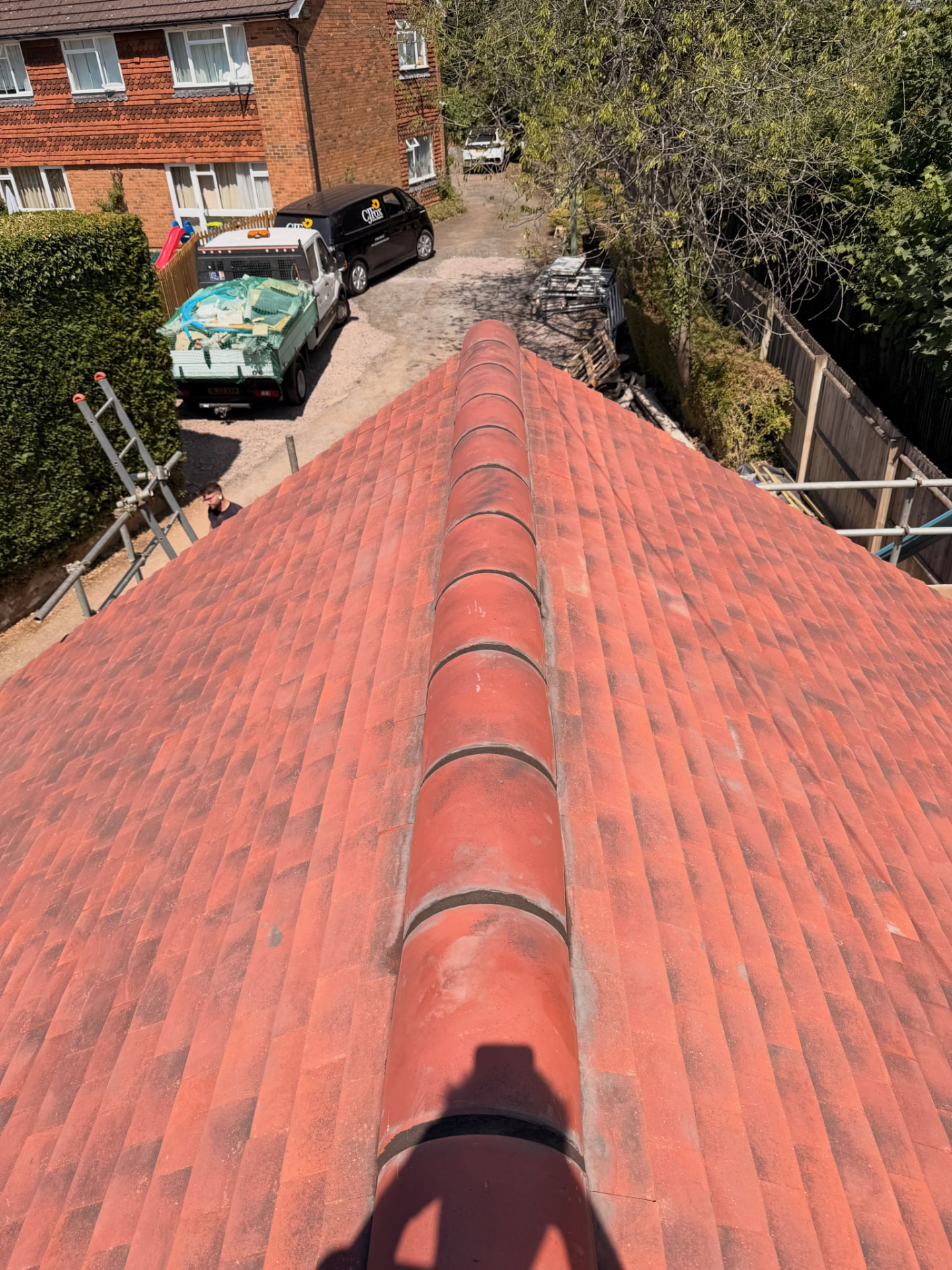
Ridge line of a completed clay tiled roof in Berkshire

Next step

Find out exactly what your chimney needs

Book an inspection and you will get a photographic report of the stack, the flaunching and the flashings, with one fixed price for repair, rebuild or removal. Free in most cases, and no obligation to proceed.

  • Fixed-price quotes only, no day rates
  • Photographic report with every inspection
  • £2 million public liability cover
  • 10-year workmanship guarantee on re-roofs, new roofs and major works

151 Larchfield Road, Maidenhead, Berkshire, SL6 2SJ · Mon–Sat, 7am–10pm

Call NowFree Quote