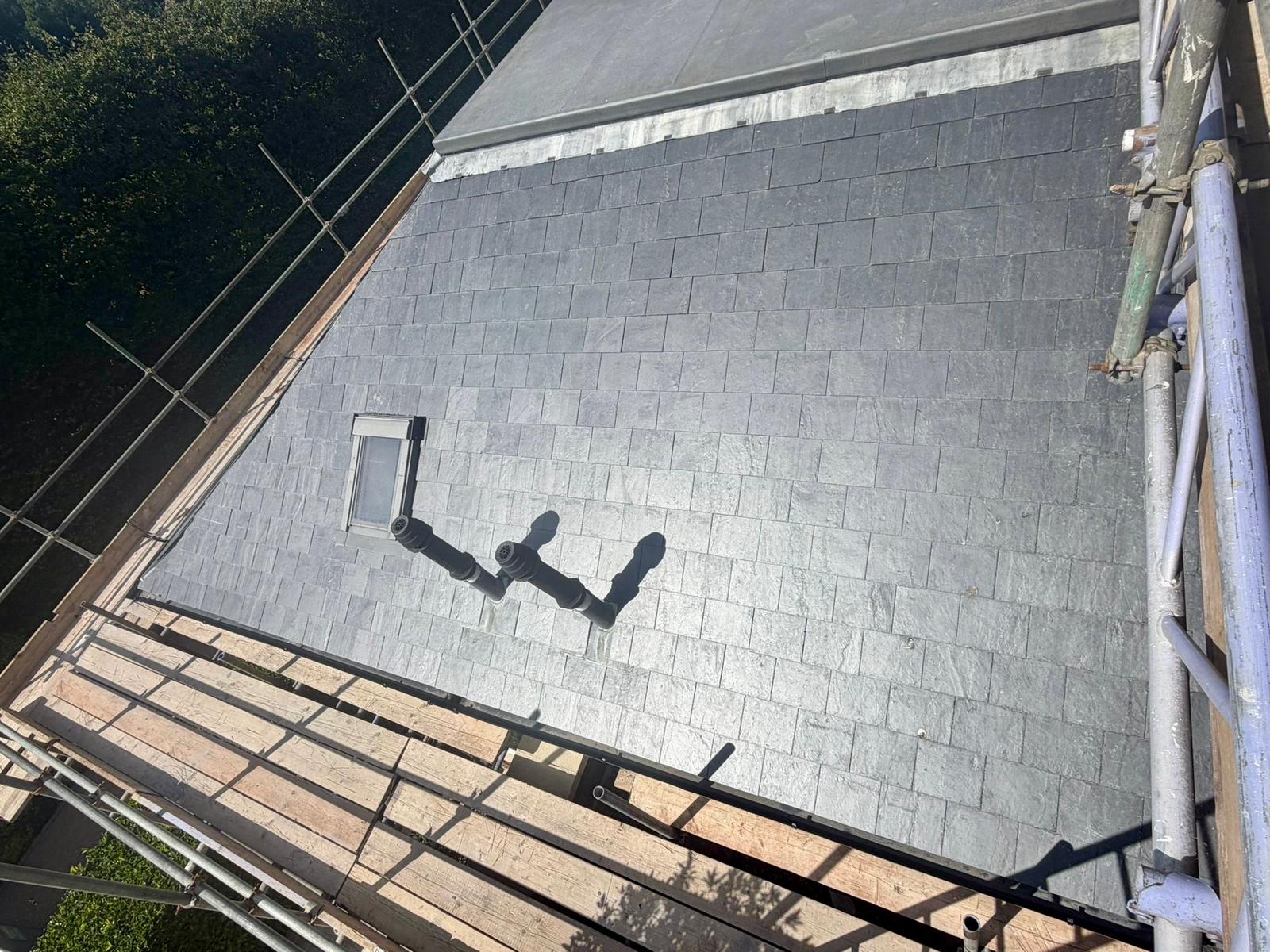
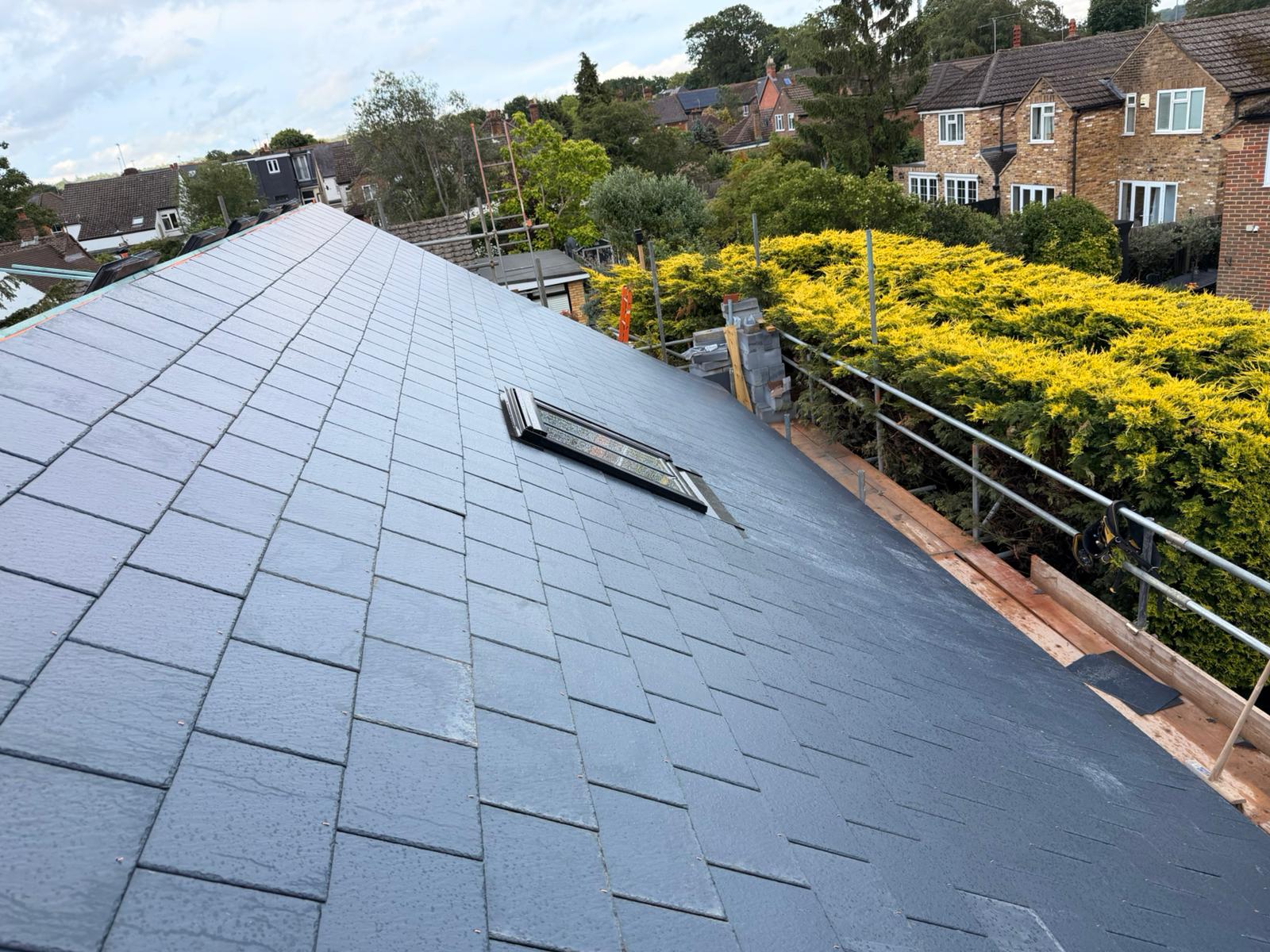
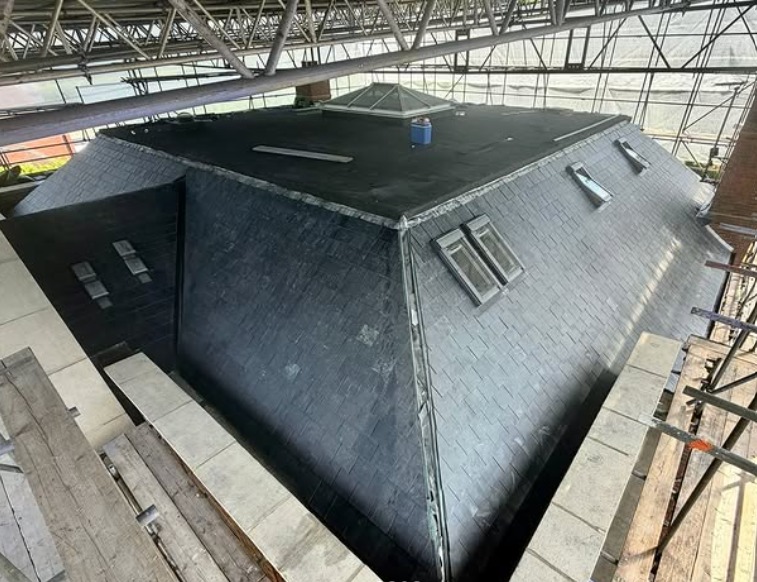
Natural slate is quarried stone split into roofing units, and it behaves differently to manufactured tiles: it varies in thickness and texture even within the same batch, it is hung and fixed with different techniques depending on whether it is being repaired, re-hung or laid new, and it needs to be matched carefully by size, colour and thickness to sit correctly within an existing roof. Work on a natural slate roof ranges from re-hanging a handful of slipped slates on tingles, through repointing ridges and repairing valleys and flashings around a slated roof, to stripping and re-covering a whole roof in new or reclaimed natural slate.
Most natural slate roofing work in this region involves period and listed properties, where the roof was originally covered in slate, commonly Welsh, but also other regional slates depending on the building's age and origin, and where planning conditions or simple sympathy for the building mean any re-covering has to stay in natural slate rather than a slate-effect substitute. Matching existing slate on a repair means finding units of the right size, thickness and weathering to sit invisibly among the surrounding coursing, which is a different skill from laying a uniform new slate roof from scratch.
Slate's advantage over most other coverings is longevity: correctly hung natural slate with sound fixings can perform for many decades, often far longer than the battens, felt or nails originally used to hang it. That means a large proportion of slate roofing work is not the slate failing at all, but the fixings failing beneath sound slate, nail sickness, corroded fixings and perished underlay letting good slate slip or lift. Recognising the difference between failed slate and failed fixings is central to specifying the right repair or re-roof.